





What's Happening?
In May 2026, skywatchers can look forward to a series of celestial events, including the Eta Aquarid meteor shower and a rare Blue Moon. The Eta Aquarid meteor shower, originating from Halley's Comet, will peak in early May, offering up to 50 meteors
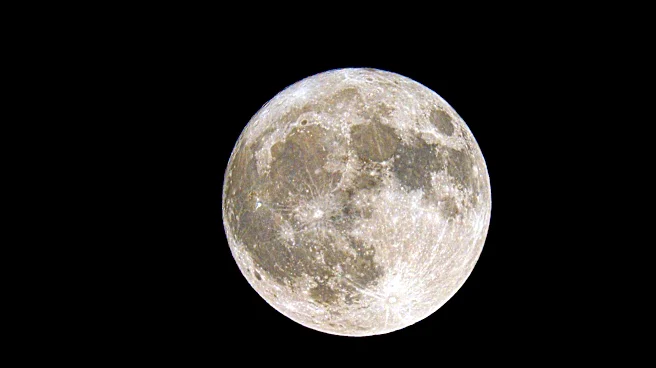
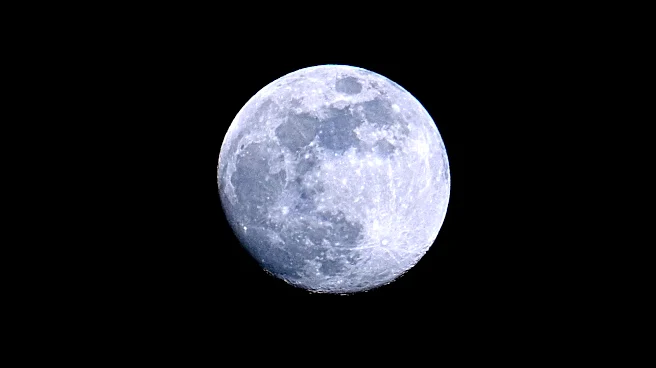
per hour under ideal conditions. This meteor shower is best viewed in the pre-dawn hours, looking towards the eastern sky. Additionally, on May 18, a conjunction between the Moon and Venus will be visible just after sunset. The month will conclude with a Blue Moon on May 31, marking the second full moon of the month. This Blue Moon will not appear blue but is notable for its rarity, occurring approximately every two to three years.
Why It's Important?
These astronomical events provide opportunities for public engagement with science and space exploration. The Eta Aquarid meteor shower and the Blue Moon are accessible phenomena that can inspire interest in astronomy and the broader field of space science. Such events can also serve as educational moments, encouraging people to learn more about the solar system and the mechanics of celestial bodies. For amateur astronomers and enthusiasts, these occurrences offer a chance to observe and document rare and beautiful sky phenomena, fostering a deeper appreciation for the universe.
What's Next?
Following these events, the next significant celestial occurrence will be the Strawberry Moon in June. As for the Blue Moon, the next occurrence will be in May 2027. These events continue to provide opportunities for public engagement and education in astronomy. Organizations like NASA will likely continue to promote these events, offering resources and guidance for optimal viewing experiences.