





What's Happening?
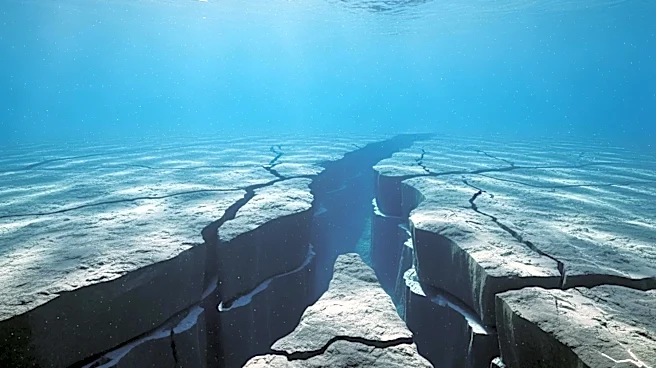
A study published in the journal Science has uncovered the mechanism behind underwater 'brake zones' that can halt earthquakes. Led by Jianhua Gong from Indiana University, the research focused on the Gofar fault in the Pacific Ocean, which has consistently
produced similar earthquakes over decades. These brake zones are formed by seawater and rocks that interact to stop seismic activity. The study involved analyzing data from ocean-floor experiments, revealing that these zones are dynamic regions where the fault branches out, allowing seawater to fill the cracks and halt tremors. This discovery could enhance earthquake prediction methods.
Why It's Important?
Understanding these natural earthquake brakes is crucial for improving seismic prediction and potentially mitigating the impact of earthquakes. The findings could lead to better forecasting models, particularly for regions like California's Hayward Fault, which is overdue for a significant earthquake. By studying these brake zones, scientists can gain insights into the conditions that prevent earthquakes, potentially leading to new strategies for earthquake preparedness and risk reduction.