


What's Happening?
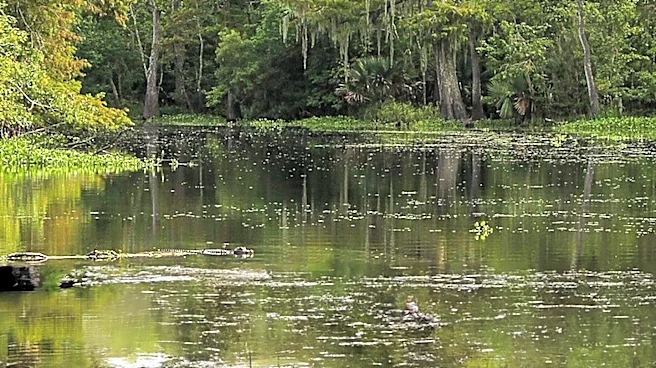
Jim Stevenson and Tara Tanaka, a Florida couple, purchased a 45-acre cypress swamp adjacent to their Tallahassee home in 2007 to prevent its development. Over 15 years, their dedicated conservation efforts transformed the land into a vibrant wildlife
sanctuary. By 2022, the U.S. Fish and Wildlife Service reported that the sanctuary hosted 275 nesting wood storks, alongside a diverse array of other wildlife including herons, egrets, ducks, alligators, otters, beavers, and foxes. Stevenson, a retired state park biologist, actively managed the habitat by removing invasive species like Chinese tallow trees and using prescribed fire. Tanaka, an award-winning photographer, documented the wildlife, turning her backyard into a significant observatory. In 2016, they secured the land's future by placing a conservation easement with the Apalachee Land Conservancy, permanently restricting future development and ensuring its preservation.
Why It's Important?
This initiative highlights the critical role of private land ownership in U.S. conservation efforts, demonstrating that significant ecological impact can be achieved outside of large national parks or government reserves. The success of Stevenson and Tanaka's sanctuary, particularly in supporting the recovery of the wood stork—a species recently removed from the federal endangered list—underscores the effectiveness of localized, hands-on habitat management. Their work provides a model for other private landowners, especially in the U.S. Southeast where much of the habitat is privately held, showing how small, protected wetlands can serve as vital ecological islands within urbanizing landscapes. This effort also contributes to broader environmental health by preserving wetlands that regulate water quality and support regional aquifers, benefiting the wider community beyond just wildlife.
What's Next?
The conservation easement ensures the permanent protection of the 45-acre cypress swamp, safeguarding it from future development and maintaining its role as a wildlife sanctuary. The Apalachee Land Conservancy will oversee the adherence to the easement's restrictions, which prohibit activities like shooting or fishing, further preserving the delicate ecosystem. The couple's past efforts to educate other private landowners on habitat management may continue to inspire similar conservation projects, potentially leading to a network of privately protected lands. The ongoing success of the sanctuary will continue to contribute to the regional biodiversity and the overall health of Florida's wetland ecosystems, serving as a living example of effective private conservation.
Beyond the Headlines
The story of Stevenson and Tanaka's swamp transcends a simple conservation success; it embodies a profound ethical commitment to environmental stewardship. Their decision to purchase and actively manage the land reflects a deep understanding that human actions have direct and lasting impacts on natural ecosystems. This initiative challenges the conventional view that conservation is solely the domain of large organizations or government agencies, demonstrating the power of individual dedication. It also highlights the often-overlooked value of wetlands, not just as wildlife habitats but as crucial components of broader ecological systems that provide essential services like water purification and flood control. The couple's work fosters a cultural shift towards recognizing and valuing the ecological significance of even seemingly undesirable land, promoting a more integrated approach to human-nature coexistence.