


What's Happening?
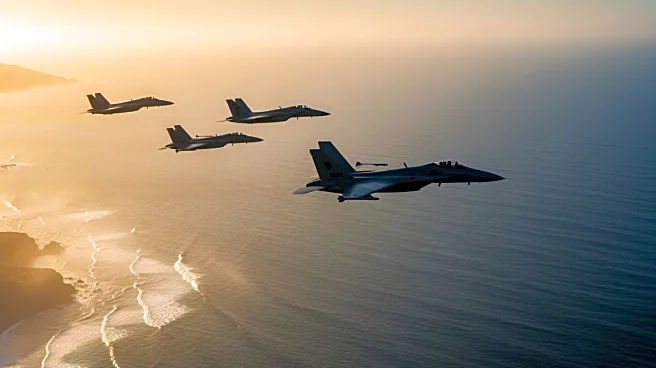
Two US F/A-18 Super Hornet fighter jets were observed circling the Gulf of Venezuela, near Maracaibo, as tensions between the US and Venezuela continue to escalate. The jets, tracked on flight monitoring sites, conducted a 40-minute flight in the area.
A US defense official described the activity as a 'routine training flight.' This incident follows a series of US military actions in the Caribbean, aimed at combating drug trafficking from Venezuela. Venezuelan President Nicolás Maduro has accused the US of using these operations to destabilize his government. The US has not confirmed any plans to deploy troops to Venezuela, although President Trump has suggested that Maduro's time in power is limited. The flights are part of a broader pattern of US military presence in the region, including previous flights by B-52 and B-1 bombers.
Why It's Important?
The presence of US military aircraft near Venezuela highlights the ongoing geopolitical tensions between the two nations. The US has been vocal about its opposition to Maduro's government, which it accuses of human rights abuses and corruption. The military maneuvers serve as a demonstration of US military capabilities and a warning to the Venezuelan leadership. This situation could impact US-Venezuela relations, potentially leading to further diplomatic or military actions. The operations also underscore the US's commitment to addressing drug trafficking in the Caribbean, which has broader implications for regional security and US foreign policy.
What's Next?
The US may continue its military presence in the region, potentially increasing pressure on the Venezuelan government. This could lead to further diplomatic tensions or negotiations. The international community will likely monitor the situation closely, as any escalation could have significant implications for regional stability. Venezuela may seek support from allies to counter US actions, while the US may engage with regional partners to strengthen its position.