



What's Happening?
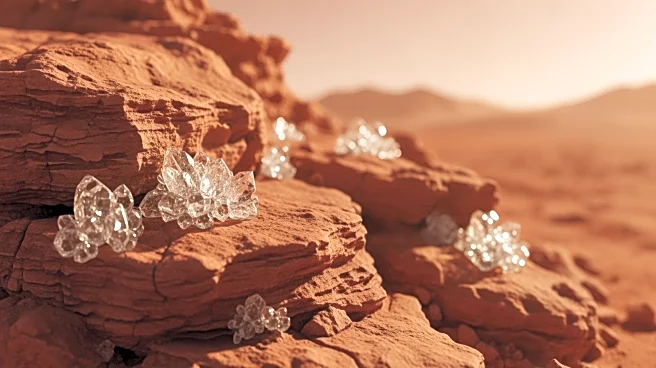
Research is exploring the potential of Earth's toughest microbes to aid in human colonization of Mars. Scientists are investigating biomineralization, a process where microorganisms create minerals, to develop building materials from Martian soil. This
approach could enable the construction of habitats on Mars using local resources, reducing the need for costly material transport from Earth. The study focuses on a partnership between two bacteria, Sporosarcina pasteurii and Chroococcidiopsis, which together can transform Martian regolith into a solid, concrete-like material. This innovative method could support the creation of sustainable living environments on the Red Planet.
Why It's Important?
The ability to construct habitats on Mars using in situ resources is crucial for the feasibility of long-term human presence on the planet. This research not only addresses the logistical challenges of transporting building materials from Earth but also opens new avenues for sustainable living in extraterrestrial environments. The success of this approach could significantly advance space exploration and the potential for human settlement beyond Earth. Additionally, the use of microbial processes for construction highlights the interdisciplinary nature of space research, combining biology, engineering, and materials science.
What's Next?
As space agencies plan for crewed missions to Mars in the coming decades, further research and testing of microbial construction methods are essential. The development of robust control algorithms and specialized protocols for robotic systems will be critical to ensure efficient and reliable construction in Mars's unique environment. Continued experimentation with regolith simulants and microbial communities will help refine these techniques, moving closer to the goal of establishing human habitats on Mars.