
What's Happening?
A recent study published in Nature has revealed a significant role for astrocytes, a type of glial cell, in the stabilization of memories after recall. Traditionally, memory stability has been attributed
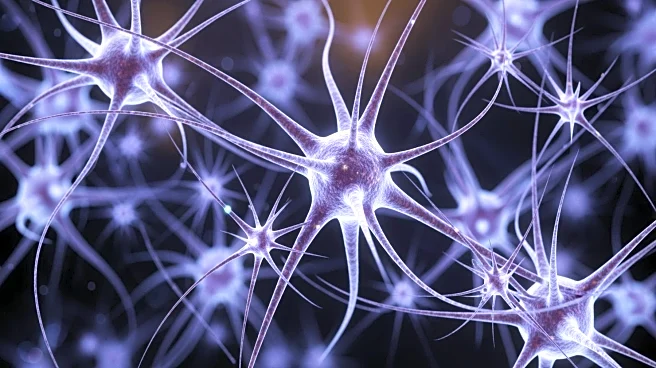
to neuronal engrams, which are specific populations of neurons that undergo lasting changes during learning. However, this study, led by Dewa et al., highlights that astrocytes also play a crucial role in this process. The researchers found that emotionally salient experiences 'biologically tag' small ensembles of astrocytes, creating traces that can be reactivated during recall. This discovery expands the traditional neuron-centric model of memory storage and suggests that astrocytes contribute to the stabilization of recalled memories. The study utilized a genetic tagging system to track astrocyte activation in mice, revealing that these cells are selectively recruited during memory recall rather than during initial learning.
Why It's Important?
The findings of this study have significant implications for understanding memory processes and potential treatments for cognitive and neuropsychiatric disorders. By identifying astrocytes as key players in memory stabilization, this research challenges the traditional focus on neurons and opens new avenues for therapeutic strategies. The ability to modulate memory stability through astrocytes could lead to advancements in treating conditions like post-traumatic stress disorder (PTSD) and other disorders characterized by maladaptive memory persistence. Furthermore, this research may inform the development of neurotechnologies and brain-computer interfaces by highlighting the importance of glial cells in memory processes, potentially leading to more effective interventions.
What's Next?
Future research is needed to explore whether similar astrocytic mechanisms operate in other types of memory beyond fear learning, such as episodic and spatial memory. Understanding the role of astrocytes in different memory domains could provide a more comprehensive view of memory stabilization processes. Additionally, these findings could have translational relevance for neurodegenerative diseases, where astrocytes are already implicated. Further studies could refine cognitive assessments and illuminate memory-related vulnerabilities, potentially leading to new diagnostic and therapeutic approaches.
Beyond the Headlines
This study not only shifts the focus from neurons to astrocytes in memory research but also suggests a broader role for glial cells in brain function. Recognizing astrocytes as active determinants of memory stability could reshape future research and treatment strategies, emphasizing the need for a more inclusive approach that considers both neurons and glial cells. This perspective could lead to innovative therapies and technologies that better address the complexities of brain function and memory.