





What's Happening?
Arizona's Central Arizona Project (CAP), a 336-mile system of canals, pipelines, and pumping plants vital for supplying water to Phoenix and Tucson, is currently threatened by severe water shortages. This crisis was predicted decades ago by the original
architects of the canal system in the 1960s. They explicitly warned that the CAP's position in the water allocation hierarchy meant it would be among the first to face cutbacks during periods of lower water flows. These warnings, largely unheeded for decades, are now manifesting as a significant challenge to the water supply for major Arizona cities. The system, which was an ambitious engineering feat designed to bring Colorado River water to the desert, is now confronting the very issues its creators foresaw.
Why It's Important?
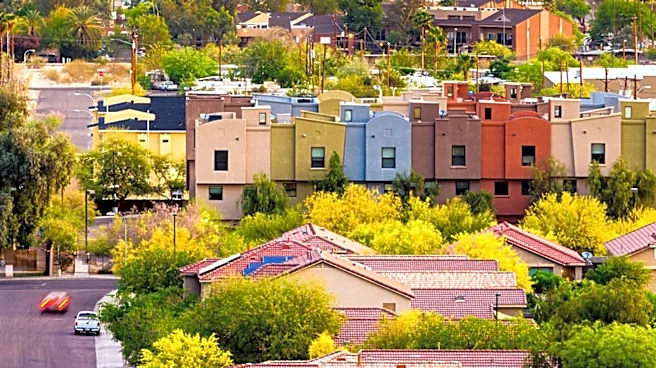
The drying up of Arizona's lifeline to the Colorado River carries profound implications for the state's economy, urban development, and agricultural sector. Phoenix and Tucson, two of the fastest-growing metropolitan areas in the U.S., are heavily reliant on CAP water. Reduced water availability could lead to significant restrictions on water use, impacting residential consumption, industrial operations, and agricultural output, particularly in a state known for its arid climate. The situation highlights the long-term consequences of ignoring expert warnings regarding critical infrastructure and resource management. It also underscores the broader challenge of water scarcity in the American Southwest, a region grappling with prolonged drought and increasing demand, potentially leading to interstate conflicts over water rights and allocation.
What's Next?
Arizona will likely face continued pressure to implement more stringent water conservation measures and explore alternative water sources. Negotiations and agreements with other states sharing the Colorado River will become even more critical as water levels decline. The state may need to invest in advanced water treatment technologies, such as desalination, or explore water banking and transfer programs to secure its future water supply. The unfolding crisis could also prompt a re-evaluation of urban planning and development strategies in arid regions, emphasizing sustainable growth models that account for limited natural resources. Furthermore, the situation may accelerate the adoption of innovative agricultural practices that require less water.
Beyond the Headlines
The current water crisis in Arizona extends beyond immediate supply issues, touching upon themes of historical foresight, environmental stewardship, and the long-term sustainability of human settlements in challenging environments. The fact that warnings from the 1960s were largely ignored raises questions about policy-making processes and the prioritization of short-term gains over long-term environmental and resource planning. This scenario serves as a stark reminder of the interconnectedness of natural systems and human infrastructure, and the potential for past decisions to shape future crises. It also highlights the ethical considerations of resource allocation, particularly when vital resources like water become increasingly scarce, potentially leading to social and economic disparities.