




What's Happening?
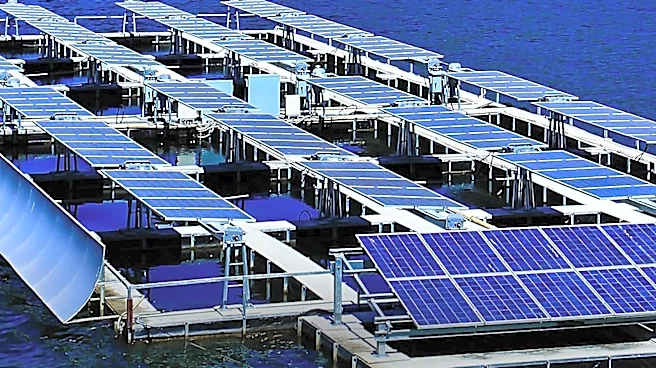
California has launched Project Nexus, an innovative initiative to cover irrigation canals with solar panels in Stanislaus County. This pilot project aims to generate 1.6 MW of clean electricity while addressing land scarcity and water loss. By installing
solar arrays over existing water canals, the project not only conserves land but also reduces water evaporation by up to 70% and decreases aquatic weed growth by 85%. The flowing water beneath the panels helps cool them, enhancing their efficiency. This dual-purpose infrastructure is seen as a potential model for maximizing clean energy generation while preserving natural resources.
Why It's Important?
The project represents a significant step in addressing the dual challenges of land scarcity and water conservation in the context of renewable energy expansion. As global warming strains freshwater resources and land-use conflicts slow solar development, innovative solutions like Project Nexus are crucial. By reducing water evaporation and improving solar panel efficiency, the project could serve as a model for similar initiatives worldwide. This approach not only supports California's renewable energy goals but also contributes to broader efforts to mitigate climate change impacts and preserve vital natural resources.
What's Next?
If successful, Project Nexus could inspire the deployment of solar panels over water reservoirs and canals on a larger scale. This could lead to significant water savings and increased renewable energy production across California and potentially other regions facing similar challenges. The project's outcomes will likely influence future policy decisions and investments in renewable energy infrastructure, encouraging the integration of environmental conservation with energy production.