
What's Happening?
Israeli Prime Minister Benjamin Netanyahu recently took an unusual flight path to the United States, avoiding several European countries. This decision appears to be influenced by an arrest warrant issued
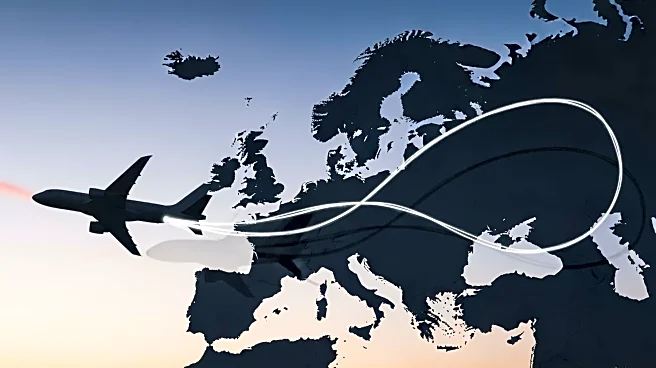
by the International Criminal Court (ICC) for alleged war crimes and crimes against humanity. The flight, which typically would pass over multiple European nations, instead traveled over the Mediterranean Sea and the Strait of Gibraltar, briefly crossing Greek and Italian airspace but avoiding French and Spanish territories. The Prime Minister's Office has not publicly commented on the reasons for this route, although it was noted that some journalists and entourage members were not on the flight due to 'technical arrangements related to seating and security.' This move is seen as a precaution to avoid potential enforcement of the ICC warrant, as many European countries are ICC members and could arrest Netanyahu if he entered their airspace.
Why It's Important?
The flight route taken by Netanyahu underscores the complexities and diplomatic challenges posed by international legal actions such as those by the ICC. While neither Israel nor the United States are ICC members, the warrant represents a significant legal and political issue, potentially affecting Netanyahu's international travel and diplomatic engagements. This situation highlights the tension between national sovereignty and international legal frameworks, as well as the potential for international legal actions to influence political and diplomatic strategies. The decision to avoid certain airspaces reflects the broader implications of international law on state leaders and their movements, potentially impacting Israel's diplomatic relations with European countries.
What's Next?
The situation may prompt further diplomatic discussions between Israel and European countries regarding the ICC's jurisdiction and the enforcement of its warrants. Netanyahu's travel plans could continue to be influenced by the ICC's actions, potentially affecting his ability to engage in international diplomacy. Additionally, this incident may lead to increased scrutiny of the ICC's role and its impact on international relations, particularly concerning non-member states like Israel and the United States. The international community may also watch closely for any changes in the ICC's approach to similar cases in the future.