




What's Happening?
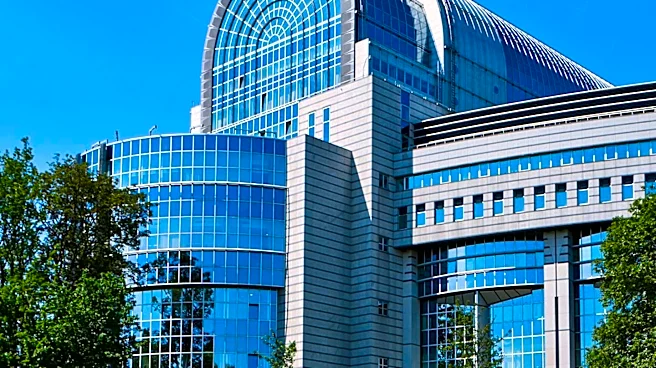
Roberta Metsola, President of the European Parliament, met with Armenian Prime Minister Nikol Pashinyan in Brussels, affirming the European Parliament's commitment to close cooperation with Armenia. President Metsola welcomed Prime Minister Pashinyan's
visit, highlighting the active bilateral dialogue that contributes to the consistent development of relations between Armenia and the European Union. She stated that the European Parliament will continue to work closely with Armenia to effectively advance their bilateral agenda. Prime Minister Pashinyan acknowledged the extensive bilateral agenda and recent high-level events as evidence of strong relations, emphasizing that the European Parliament is a proponent of the Armenia-EU partnership. He also expressed Armenia's high regard for the European Parliament's ongoing support, particularly its stance on granting trade preferences to Armenia for a two-year period. Discussions during the meeting also covered issues related to Armenia-EU relations, regional developments, and steps to ensure transport connectivity.
Why It's Important?
This meeting underscores the growing strategic importance of Armenia in the broader European context, which has implications for U.S. foreign policy in the South Caucasus region. The European Parliament's commitment to advancing its bilateral agenda with Armenia, including potential trade preferences, could strengthen Armenia's economic and political ties with the West. For the U.S., this development is significant as it aligns with efforts to promote stability and democratic values in a region often subject to geopolitical competition. Increased EU engagement could provide Armenia with alternatives to traditional alliances, potentially diversifying its foreign policy and economic partnerships. This could also influence regional dynamics, as a stronger, more Western-aligned Armenia might impact the balance of power and security considerations in the South Caucasus, an area where the U.S. has vested interests in peace and economic development.
What's Next?
Following the meeting, the European Parliament is expected to continue its efforts to deepen cooperation with Armenia, particularly in areas related to trade, regional stability, and democratic reforms. The discussion on granting trade preferences to Armenia for a two-year period suggests that concrete economic measures may be forthcoming, which could further integrate Armenia into European markets. Future engagements will likely focus on implementing aspects of the bilateral agenda, including initiatives to enhance transport connectivity and address regional developments. The ongoing support from the European Parliament, as highlighted by Prime Minister Pashinyan, indicates a sustained commitment to Armenia's European trajectory. This trajectory could lead to further political and economic alignment, potentially influencing Armenia's long-term strategic orientation and its relationships with other international actors.
Beyond the Headlines
The emphasis on a 'leadership gap' rather than an 'ambition gap' in political representation, as discussed by President Metsola in other contexts, subtly informs the broader European approach to international relations. By advocating for inclusive leadership, the European Parliament signals a commitment to diverse perspectives not only internally but also in its engagement with partner nations like Armenia. This philosophical underpinning suggests that the EU's support for Armenia extends beyond mere geopolitical interests to include a promotion of democratic principles and inclusive governance. For the U.S., understanding this nuanced approach is crucial for effective diplomatic engagement, as it highlights the EU's values-driven foreign policy. The long-term implication is that as Armenia strengthens its ties with the EU, it may increasingly adopt European standards of governance and societal inclusion, potentially fostering a more stable and predictable partner in a volatile region.