



What's Happening?
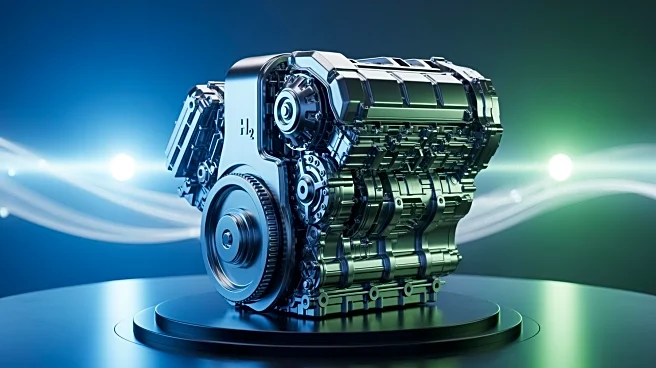
Japan Engine Corporation, in collaboration with Kawasaki Heavy Industries, has developed a large hydrogen-fueled engine for ocean-going vessels. This project marks a significant technological advancement as most hydrogen initiatives have focused on smaller
engines for coastal vessels. The engine is part of a government-sponsored project through the New Energy and Industrial Technology Development Organization (NEDO). The engine has achieved a hydrogen co-firing ratio of over 95% at full load during lab tests, demonstrating both greenhouse gas reduction and stable operation. The engine is set to be installed in a 17,500 dwt hydrogen-fueled multi-purpose vessel designed by Onomichi Dockyard, with operations by MOL and MOL Drybulk. The vessel will undergo three years of demonstrations starting in FY2028.
Why It's Important?
This development is crucial as it represents a major step towards the practical use of hydrogen as an alternative fuel for large ocean-going ships. The successful implementation of hydrogen-fueled engines could significantly reduce greenhouse gas emissions in the maritime industry, which is a major contributor to global emissions. The project aligns with global efforts to transition to cleaner energy sources and could set a precedent for other countries and companies to follow. The success of this project could also enhance Japan's position as a leader in green technology and innovation in the maritime sector.
What's Next?
The next steps involve continued verification testing to optimize the engine's performance under hydrogen co-firing conditions. The full-scale verification is expected to be completed with the engine's shipment in January 2027. The vessel's demonstration phase will provide valuable data and insights into the operational viability of hydrogen-fueled engines in large vessels. If successful, this could lead to broader adoption of hydrogen technology in the maritime industry, potentially influencing regulatory standards and encouraging further investment in hydrogen infrastructure.