
What's Happening?
In a groundbreaking medical achievement, doctors at Northwestern Medicine Canning Thoracic Institute in Chicago successfully kept a critically ill patient alive for two days without lungs. The patient,
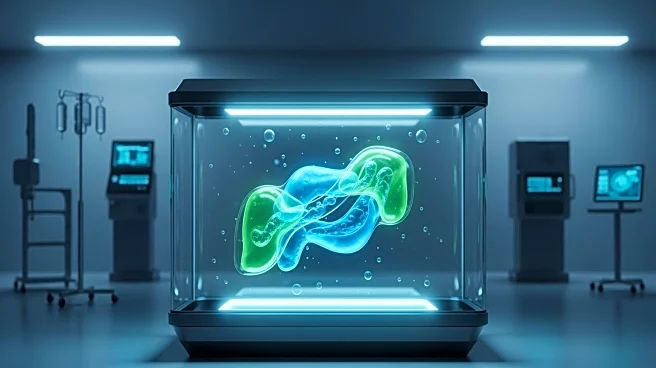
suffering from severe lung disease, underwent a procedure where both lungs were removed to halt a life-threatening infection. During this period, an external system, referred to as a 'total artificial lung,' maintained the patient's oxygenation and blood circulation. This system, which is an advanced form of extracorporeal life-support technology, allowed the patient to stabilize until a double lung transplant could be performed. The patient, now in his mid-30s, has returned to normal life with excellent lung function, nearly three years post-surgery.
Why It's Important?
This medical advancement holds significant implications for the treatment of severe lung diseases, particularly in cases where infections render the lungs non-functional. The ability to sustain life without lungs for a short period provides a critical window for doctors to plan and execute lung transplants more effectively. This could potentially reduce the mortality rate among patients awaiting transplants, as nearly 40% of such patients die before suitable donor organs become available. The success of this procedure also opens new avenues for the development of durable, long-term artificial lung systems, which could revolutionize the management of respiratory failure and transplant logistics.
What's Next?
The Chicago team's success may lead to further innovations in artificial lung technology, potentially resulting in systems that are safer and more refined. This could eventually allow for wearable devices that enable patients to remain mobile and off ventilators while awaiting transplants. However, widespread application of this procedure is currently limited due to its specialized nature, requiring advanced life-support systems and rapid access to donor organs. Future developments will likely focus on refining the technology to address side effects and complications, making it more accessible and practical for broader use.
Beyond the Headlines
The implications of this breakthrough extend beyond immediate medical benefits. It challenges long-held assumptions about the fatality of removing both lungs and highlights the potential for artificial organs to transform healthcare. As technology evolves, the concept of a total artificial lung could lead to significant shifts in how respiratory diseases are managed, potentially reducing the burden on healthcare systems and improving patient outcomes globally. Ethical considerations will also play a role, particularly in the context of clinical trials and the equitable distribution of such advanced medical technologies.