


What's Happening?
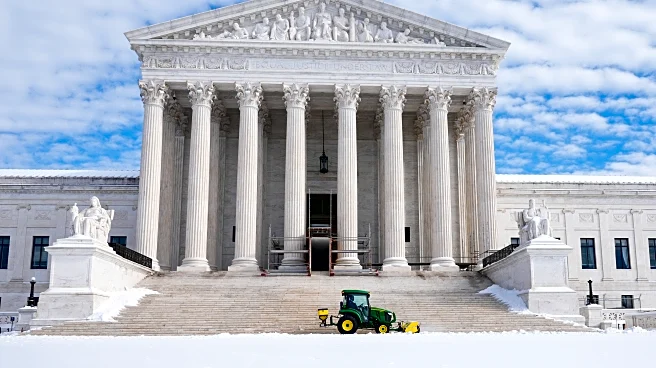
The U.S. Supreme Court is deliberating on a significant jurisdictional issue in a lawsuit involving Chevron U.S.A., Inc. and Plaquemines Parish, Louisiana. The case centers on whether the lawsuit, which accuses oil companies of contributing to coastal
erosion, should be heard in federal or state court. The oil companies argue for federal jurisdiction, citing their operations under federal orders during World War II. Conversely, the parishes prefer state court, where local juries can assess the impact of oil production on their communities. The decision could affect 41 similar lawsuits and a $745 million jury verdict from a state court trial last year. Justice Samuel Alito recused himself due to a conflict of interest, potentially leading to a split decision.
Why It's Important?
The Supreme Court's ruling will have significant implications for the oil industry and environmental litigation. A decision favoring federal jurisdiction could set a precedent for similar cases, potentially limiting local courts' ability to hold companies accountable for environmental damage. This could impact the financial liabilities of oil companies and influence future environmental policies. Conversely, a ruling for state jurisdiction would empower local courts and communities, potentially leading to more stringent environmental accountability. The outcome will also affect ongoing and future lawsuits seeking reparations for environmental damage, influencing how such cases are litigated across the U.S.
What's Next?
The Supreme Court's decision is expected by summer, and it could either uphold the state court's jurisdiction, allowing the $745 million verdict to stand, or move the case to federal court, potentially vacating the verdict. If the justices develop a new legal test for jurisdiction, the case may return to lower courts for further proceedings, prolonging the litigation. The decision will be closely watched by environmental groups, the oil industry, and legal experts, as it could reshape the landscape of environmental litigation and corporate accountability.