






What's Happening?
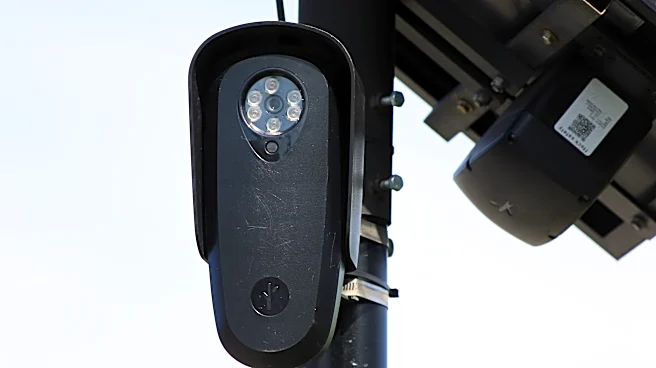
Flock, a surveillance company valued at $8.4 billion, is facing significant backlash across the U.S. due to its AI-powered automated license plate readers (ALPRs). The company has installed 120,000 cameras in every U.S. state except Alaska, with 7,000
law enforcement agencies (40% of national police departments) using its system. While Flock claims its cameras aid in a million criminal investigations annually, critics point to widespread misuse, including police officers illegally tracking romantic partners, assisting ICE in surveilling undocumented immigrants, and tracking individuals for abortion-related investigations or minor offenses like cannabis possession. This has led to both political opposition, with cities banning the cameras, and vigilante vandalism, where cameras are being destroyed or re-angled. Flock has responded with reforms, such as flagging anomalous searches and reducing data retention to seven days, but critics argue these changes are insufficient.
Why It's Important?
The controversy surrounding Flock cameras highlights a critical tension between public safety and privacy rights in the U.S., particularly with the proliferation of AI-driven surveillance technologies. The widespread adoption of Flock's system by law enforcement agencies, coupled with documented instances of misuse, raises serious concerns about civil liberties, potential for abuse, and the creation of a pervasive surveillance state. The bipartisan nature of the backlash, with both conservatives and liberals expressing concerns, underscores the broad societal implications. The debate over Flock's technology forces a national conversation about the appropriate limits of government surveillance, the need for robust oversight, and the ethical responsibilities of companies developing such powerful tools. The outcome of this backlash could set precedents for how AI surveillance is regulated and integrated into American society, impacting privacy, law enforcement practices, and community trust.
What's Next?
The backlash against Flock is expected to continue, with more cities and counties potentially cutting ties with the company. Activist groups and concerned citizens will likely intensify their efforts at city council meetings and through public records requests to expose further misuses. The debate over requiring warrants for ALPR searches, as advocated by organizations like the ACLU, will likely gain momentum, potentially leading to new legislation or legal challenges. While Flock has implemented some reforms, the pressure for more substantial changes, such as stricter accountability mechanisms and greater transparency, will persist. The market for ALPR technology will also be influenced, as other companies like Motorola and Axon offer similar products, suggesting that even if Flock's influence wanes, the underlying surveillance technology is unlikely to disappear entirely. The ongoing public discourse will shape the future of AI surveillance in the U.S.
Beyond the Headlines
The 'Flock fever' extends beyond the immediate concerns of privacy and police misconduct, touching upon deeper societal anxieties about technological control and the erosion of anonymity. The ease with which AI-powered ALPRs can create a comprehensive record of individuals' movements raises fundamental questions about the nature of freedom in a digitally monitored world. The vigilante vandalism, while illegal, reflects a desperate public response to perceived unchecked surveillance, highlighting a breakdown in trust between citizens and both technology providers and law enforcement. This situation also exposes the challenges of regulating rapidly evolving AI technologies, where legal frameworks often lag behind technological capabilities. The broader implication is a potential shift in the social contract, where the convenience and perceived safety offered by surveillance come at the cost of fundamental rights, prompting a re-evaluation of what constitutes a 'free society' in the age of artificial intelligence.