






What's Happening?
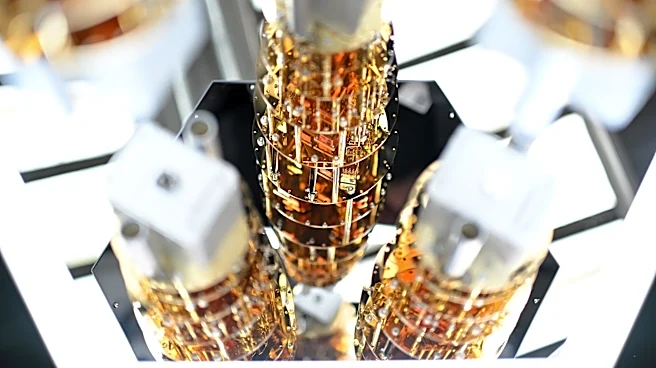
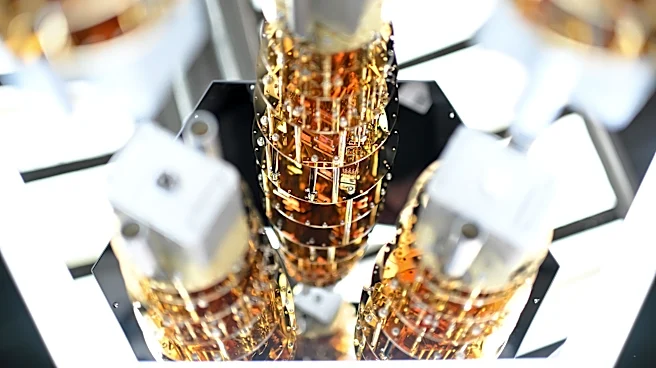
Chip-based laser cooling is emerging as a promising technology that could alleviate bottlenecks in quantum computing. This development is part of a broader trend in the North America Laser Cooling Systems Market, which is projected to grow significantly,
driven by the demand for cryogen-free cooling, miniaturization in microelectronics, and government funding for photonics research. Similarly, the Japan Laser Cooling Systems Market is also experiencing growth due to the need for precision thermal management in quantum computing research and 5G infrastructure. While specific implementations or definitive outcomes of laser photonic cooling for chips are not detailed, the general consensus from market trends indicates a strong push towards advanced cooling solutions to support the demanding requirements of next-generation computing technologies. The ability to precisely control temperatures at the chip level is crucial for maintaining the delicate quantum states necessary for quantum computing operations.
Why It's Important?
The potential of chip-based laser cooling to ease quantum computing bottlenecks is profoundly significant for the U.S. technology sector and its global competitiveness. Quantum computing requires extremely stable and low-temperature environments to function, and traditional cooling methods can be bulky, energy-intensive, and difficult to integrate at the chip level. Laser cooling offers a pathway to more compact, efficient, and precise thermal management, which is essential for scaling up quantum processors. Overcoming these cooling challenges could accelerate the development of practical quantum computers, impacting fields such as drug discovery, materials science, financial modeling, and cryptography. For the U.S., leadership in quantum computing translates into strategic advantages in national security, economic innovation, and scientific research. This technological advancement could also spur growth in related industries, including photonics, advanced manufacturing, and specialized electronics, creating new jobs and investment opportunities.
What's Next?
The trajectory for chip-based laser cooling suggests continued research and development aimed at practical integration into quantum computing architectures. As the North America Laser Cooling Systems Market expands, driven by demand for cryogen-free solutions and miniaturization, we can expect to see more focused efforts on developing and commercializing chip-scale laser cooling technologies. This will likely involve collaborations between academic institutions, government-funded research programs, and private sector companies specializing in photonics and semiconductor manufacturing. The next steps will involve refining the efficiency and scalability of these cooling methods, addressing challenges related to power consumption, heat dissipation, and integration with existing chip fabrication processes. Success in these areas could lead to the deployment of more robust and accessible quantum computing hardware, moving the technology closer to real-world applications.
Beyond the Headlines
The implications of effective chip-based laser cooling extend beyond merely improving quantum computing performance. Ethically, the development of more energy-efficient cooling solutions contributes to sustainable computing practices, reducing the environmental footprint of increasingly powerful data centers and advanced computational systems. Legally, advancements in this area could lead to new intellectual property battles and patent filings as companies vie for dominance in critical quantum technologies. Culturally, the ability to manipulate matter at such precise levels, down to individual atoms and photons for cooling, represents a significant leap in human technological mastery, pushing the boundaries of what is physically possible. Long-term, widespread adoption of such advanced cooling could enable entirely new paradigms of computing and sensing, fostering a technological revolution that impacts every facet of modern life, from personalized medicine to artificial intelligence and beyond.