
What's Happening?
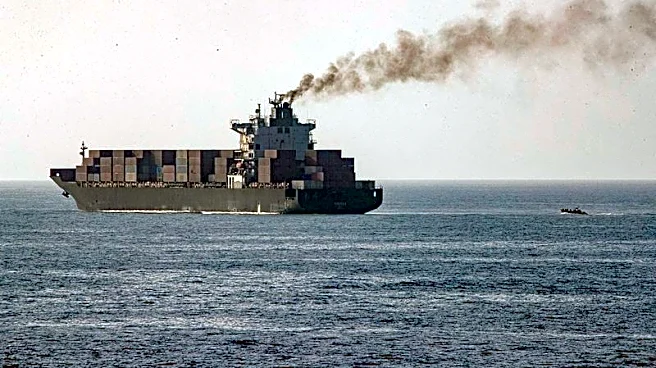
Crypto scammers are targeting cargo ships in the Strait of Hormuz, offering safe passage in exchange for cryptocurrency payments. The Greek maritime risk management firm MARISKS has issued a warning about
these fraudulent messages, which claim to represent Iranian authorities. The scam involves demanding transit fees in Bitcoin or Tether for clearance through the strait. This comes amid heightened tensions, with Iran blockading the strait in response to U.S. actions. The strait is a critical shipping channel, with around 20% of the world's oil and natural gas passing through it. Recently, at least two ships attempting to navigate the strait were fired upon by Iranian warships, with one vessel reportedly falling victim to the scam.
Why It's Important?
The emergence of crypto scams in the Strait of Hormuz highlights the vulnerabilities in global shipping and the potential for exploitation during geopolitical tensions. The strait is a vital artery for global energy supplies, and disruptions can have significant economic repercussions. The involvement of cryptocurrency in these scams underscores the challenges of regulating digital currencies and the ease with which they can be used for illicit activities. This situation also reflects the broader geopolitical tensions between Iran and the U.S., with potential implications for international trade and security. The use of cryptocurrency in such scams could prompt calls for stricter regulations and oversight in the digital currency market.
What's Next?
As tensions in the Strait of Hormuz continue, international stakeholders, including shipping companies and governments, may seek to enhance security measures and improve communication to prevent further incidents. The U.S. Navy's involvement in the region could lead to increased military presence and potential confrontations. Additionally, the exposure of these scams may prompt shipping companies to implement more robust verification processes to protect against fraudulent activities. The situation may also lead to discussions on the regulation of cryptocurrency transactions, particularly in high-risk areas, to prevent similar scams in the future.