



What's Happening?
A recent study published in Science highlights the increasing threat of methane emissions from Siberia due to rapid Arctic warming. Led by Professor Liu Yi from the Institute of Atmospheric Physics, the research identifies how atmospheric circulation
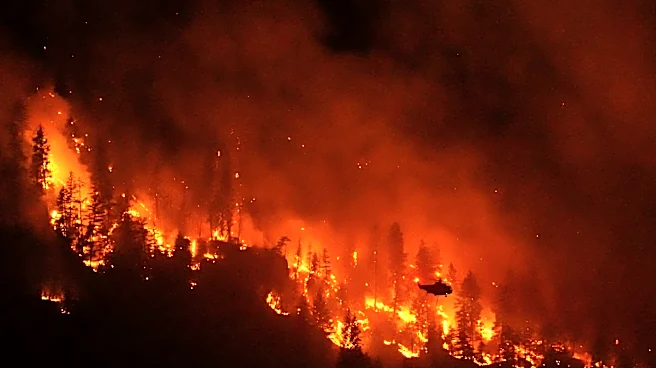
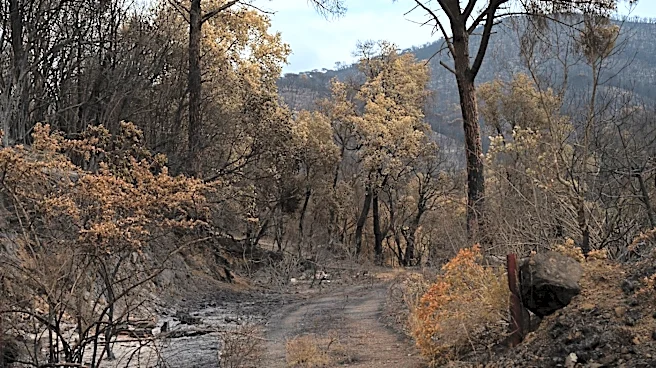
and warming-induced land-atmosphere interactions are enhancing methane emissions across Siberia. The study reveals that Siberian methane emissions have risen significantly, with an annual increase of 12.0 ± 1.9 teragrams between 2010 and 2023. This increase is largely driven by wildfires and methanogenesis, with different mechanisms affecting western and eastern Siberia. The findings underscore the complexity of quantifying methane emissions in the region and the potential impact on global methane reduction efforts.
Why It's Important?
The study's findings are crucial as they suggest that Siberian methane emissions could offset 20% of global methane reduction targets by 2050. This poses a significant challenge to international climate goals, as methane is a potent greenhouse gas contributing to global warming. The research highlights the need for global climate assessments to consider regional feedbacks and adopt more conservative assumptions about future emissions. The implications are particularly relevant for policymakers and environmental organizations working on methane mitigation strategies, as changes in natural sources could undermine efforts to reduce anthropogenic emissions.
What's Next?
The study calls for further research into the mechanisms driving methane emissions in Siberia and their impact on global climate targets. It suggests that global climate assessments should incorporate these findings to refine projections and mitigation strategies. Additionally, the study emphasizes the importance of monitoring and understanding regional climate thresholds to inform global methane-mitigation policies. As the Arctic continues to warm, ongoing research and international collaboration will be essential to address the challenges posed by rising methane emissions.