






What's Happening?
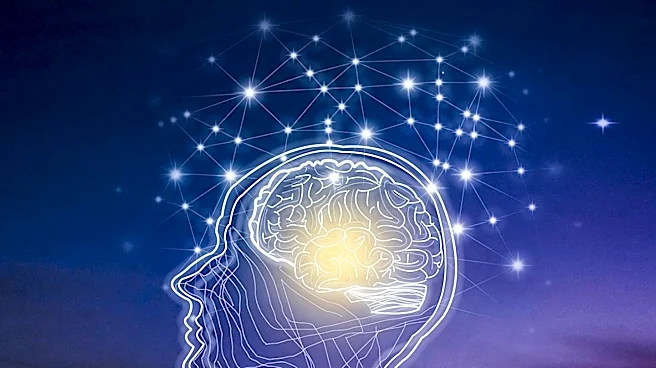
Researchers at Georgetown University have discovered that the human brain can physically reorganize itself to allow for true multitasking. This finding challenges the long-held belief that humans cannot multitask effectively. The study, led by Professor
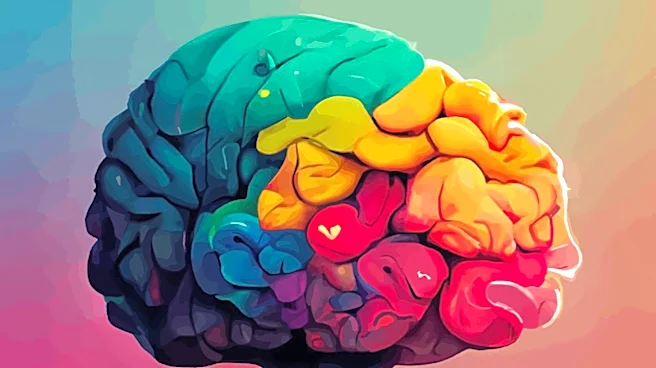
Maximilian Riesenhuber, involved participants practicing a visual sorting task over several weeks. Initially, the task activated the prefrontal cortex, responsible for executive functions. However, after extensive practice, the task was handled by the temporal cortex, which is involved in memory and object recognition. This shift allows the brain to bypass the prefrontal cortex, freeing it for other tasks and enabling true multitasking.
Why It's Important?
This discovery has significant implications for understanding how habits form and change, as well as for the development of artificial intelligence systems. By understanding how the brain can rewire itself to automate tasks, scientists can better address compulsive behaviors and improve AI's ability to learn new skills without disrupting existing knowledge. The research suggests that well-learned behaviors become less dependent on conscious control, which could explain why some habits are difficult to break. Additionally, the findings could lead to advancements in AI, allowing systems to build new skills on top of existing ones, similar to human learning.
What's Next?
The research team plans to explore what signals trigger the transfer of learning from one brain region to another and identify which tasks can be performed in parallel. This could lead to new strategies for teaching and learning, both in humans and AI systems. Understanding the brain's ability to multitask could also inform the development of interventions for breaking unwanted habits by targeting the specific brain circuits involved.