



What's Happening?
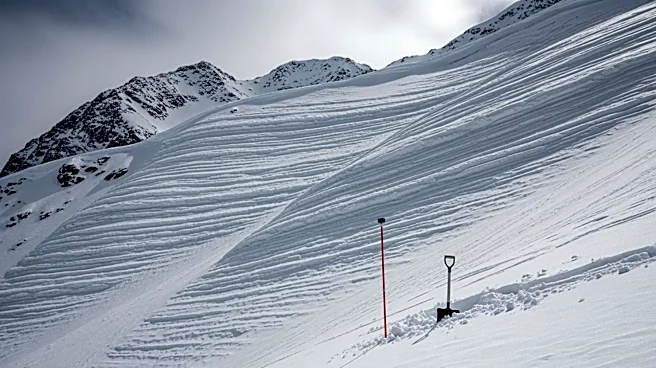
The Alps have experienced a significant increase in avalanche-related fatalities this season, with 146 deaths reported since October. This surge is attributed to complex snowpack conditions, including the formation of persistent weak layers due to early
snowfall followed by a prolonged dry period. When heavy snowfall returned, it created dense snow slabs resting on fragile layers, increasing the risk of avalanches. Despite daily avalanche bulletins providing safety information, the challenging conditions have caught even experienced individuals off guard. The situation highlights the need for improved public understanding and education on avalanche risks.
Why It's Important?
The rise in avalanche fatalities underscores the challenges posed by changing climate patterns, which are expected to bring more variability and extreme weather events. This has implications for public safety, tourism, and the outdoor recreation industry in the Alps. The increased risk of avalanches necessitates enhanced safety measures, better education, and awareness campaigns to prevent future tragedies. Understanding the human factors contributing to avalanche incidents, such as the desire to capitalize on fresh snow, is crucial for developing effective risk management strategies. The situation calls for a reevaluation of current practices and the adoption of more conservative decision-making in avalanche-prone areas.
Beyond the Headlines
The surge in avalanche deaths also raises questions about the impact of climate change on mountain environments. As weather patterns become more unpredictable, the formation of persistent weak layers in snowpacks may become more common, leading to more complex and dangerous avalanche situations. This highlights the need for ongoing research and adaptation strategies to address the evolving risks associated with climate change. Additionally, the role of social media in influencing behavior and decision-making in avalanche terrain warrants further exploration, as it may contribute to increased exposure and risk-taking among outdoor enthusiasts.