





What's Happening?
Parsons Corp. has been awarded an $85 million agreement to provide comprehensive Owner's Advisor support for the development of the new U.S. Space Command headquarters at Redstone Arsenal in Huntsville, Alabama. This 75-month agreement, issued by Army
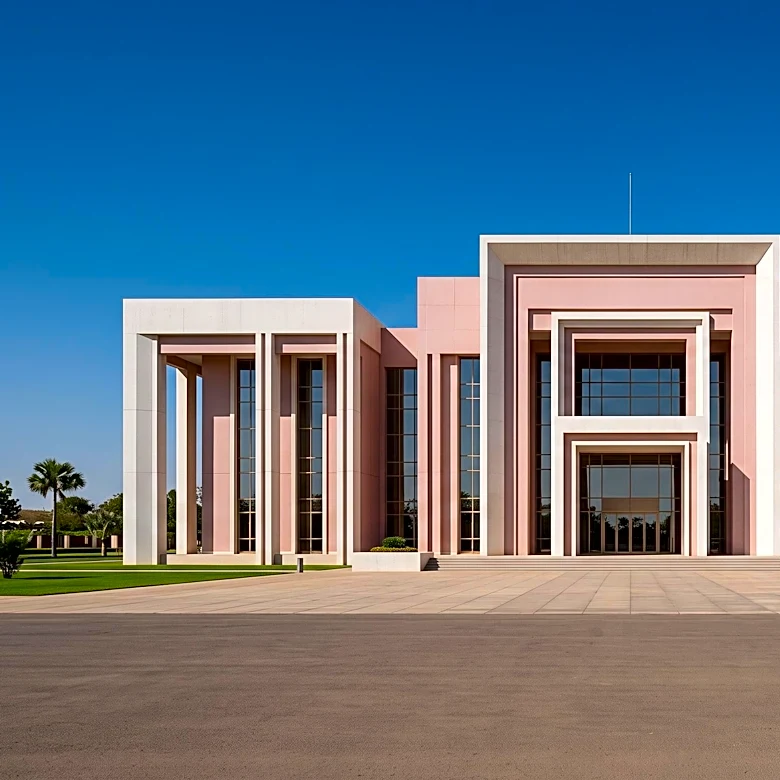
Contracting Command – Rock Island in coordination with the Air Force Civil Engineering Center, encompasses the planning, design, construction, and operationalization of the new command-and-control campus. The planned facility will span approximately 950,000 square feet and is designed to accommodate up to 1,800 personnel. It will feature a command-and-control facility, a fusion center, a visitor control center, and essential supporting infrastructure to enable continuous 24/7 operations for the U.S. Space Command's national security mission. Parsons will oversee project execution, managing scope, cost, schedule, quality, and risk, and will serve as the Owner's Advisor throughout the entire process.
Why It's Important?
This agreement is significant for several reasons, primarily bolstering the U.S. national security infrastructure and the defense industry. The construction of a dedicated, state-of-the-art headquarters for the U.S. Space Command underscores the growing importance of space in national defense strategies. For Parsons, this project represents a substantial expansion of its defense infrastructure business, leveraging synergies between its Federal Solutions and Critical Infrastructure portfolios. The use of an Owner's Advisor delivery approach, one of the Air Force's first, could set a precedent for future large-scale government projects, potentially influencing how other defense and infrastructure contracts are managed. The new facility will enhance the operational capabilities of the U.S. Space Command, allowing for more efficient and secure 24/7 operations, which is crucial for maintaining U.S. dominance and security in the space domain. This investment also signifies a commitment to the economic development of Huntsville, Alabama, as a key hub for military and aerospace operations.
What's Next?
Over the next 75 months, Parsons will be actively involved in the planning, design, construction, and operationalization phases of the new U.S. Space Command headquarters. This will involve continuous program and construction management support, ensuring the project adheres to its scope, budget, and timeline. The project's progression will likely be closely monitored by defense officials and industry stakeholders, given its strategic importance and the innovative delivery approach being utilized. As construction advances, there will be ongoing coordination between Parsons, Army Contracting Command, and the Air Force Civil Engineering Center. The successful completion of this headquarters is expected to lead to enhanced operational capabilities for the U.S. Space Command, potentially influencing future defense strategies and resource allocation for space-related initiatives. The project's success could also serve as a model for future large-scale government construction projects, particularly those involving complex command-and-control facilities.
Beyond the Headlines
The development of this new headquarters for the U.S. Space Command reflects a broader strategic shift towards recognizing space as a critical domain for national security, akin to land, air, and sea. This investment goes beyond mere infrastructure; it symbolizes the U.S.'s commitment to maintaining its competitive edge in space, especially in an era of increasing geopolitical competition and technological advancements by other nations. The facility's design for 24/7 operations and its advanced command-and-control capabilities highlight the continuous nature of space surveillance and defense. Ethically, the project underscores the dual-use nature of space technology, where advancements for national security can also drive innovation that benefits civilian applications. Culturally, the establishment of such a significant military presence in Huntsville further solidifies its identity as a hub for aerospace and defense, potentially attracting more talent and investment to the region and fostering a specialized workforce.