






What's Happening?
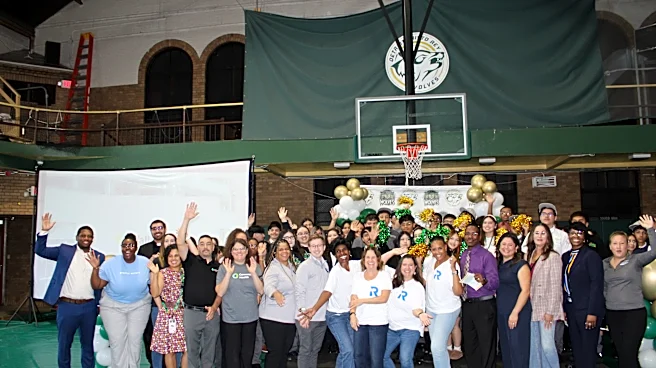
The Detroit Public Schools Community District (DPSCD) is preparing for a significant school board election this fall, with five open seats on the seven-member board. This election is viewed as a critical moment for the district, with many parents and
community members advocating for increased urgency in improving early literacy scores, facilities, and administrative transparency. Among the 34 candidates, only two incumbents, Steve Bland Jr. and Bessie Harris, are running. Several candidates are vocal critics of the current district leadership, with some specifically calling for the removal of Superintendent Nikolai Vitti, who has served for nine years. Gwen Moore, a parent of a former DPSCD student, expressed a desire for a new board to 'shake up the district and the parents' and promote accountability. The election follows a period where current board leaders opted not to seek re-election, and two members elected in 2024, Monique Bryant and Ida Short, have become more critical of Vitti's performance. The district's historian, Jamon Jordan, likened the election's importance to past seminal moments in Detroit's public school history, including the 1974 Milliken v. Bradley Supreme Court case and the 2016 'right to read' lawsuit.
Why It's Important?
This election holds substantial importance for the future trajectory of Michigan's largest school district. The outcome could either sustain the academic progress made over the last decade or lead to significant changes that might stall or reverse these gains. While DPSCD has achieved balanced budgets and consistent teacher raises under Superintendent Vitti, performance on state standardized tests and the SAT still lags behind statewide averages, leading to dissatisfaction among some critics regarding the pace of improvement. A new board could bring fresh perspectives and potentially more conflict with district leadership, as evidenced by Vitti's past experience in Florida's Duval County Public Schools. The board's responsibilities extend beyond oversight of the superintendent to include creating a new four-year strategic plan, making decisions on small schools and vacated buildings, and addressing chronic absenteeism. The expiration of settlement money from the 2016 literacy lawsuit also means the new board will face difficult decisions regarding funding for academic interventionists and tutoring, potentially impacting the district's ability to correct historical educational inequities.
What's Next?
Voters will elect a new majority to the Detroit school board this fall, which could significantly alter the district's direction. The newly elected board members will be tasked with creating the district's next four-year strategic plan, which will outline the vision and academic goals for DPSCD. They will also need to make critical decisions regarding the future of small schools and the utilization of vacated buildings. A major challenge will be navigating the budget in the upcoming cycle, especially as the settlement money from the 2016 literacy lawsuit runs out. This will necessitate finding alternative funding for existing initiatives or making cuts. The board will also need to evaluate the effectiveness of current efforts to reduce chronic absenteeism and decide how to allocate future state funding for school safety personnel and equipment. The potential for increased conflict between the new board and Superintendent Vitti is a foreseeable consequence, given the vocal criticism from some candidates and current board members.
Beyond the Headlines
The Detroit school board election transcends typical administrative changes, touching upon deeper issues of educational equity, community accountability, and the long-term impact of leadership stability. The frustrations expressed by parents and community members, such as Gwen Moore's call for accountability, stem from decades of systemic inequities faced by Black children in Detroit, as highlighted by the deplorable conditions documented in the 2016 literacy lawsuit. The debate over the pace of academic progress versus the risk of disrupting effective strategies underscores a fundamental tension in educational reform. While some researchers suggest that instability in district leadership can negatively affect student achievement, the desire for more rapid improvement and a challenge to the status quo is strong among many Detroiters. The election's outcome will not only shape the immediate future of DPSCD but also reflect the community's evolving expectations for its public education system and its willingness to embrace potentially disruptive change for the sake of greater accountability and improved student outcomes.