







What's Happening?
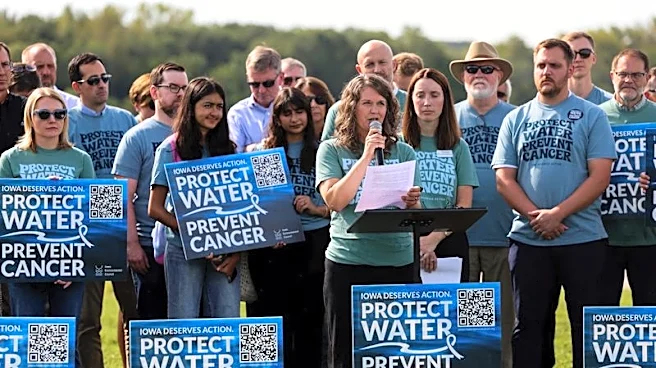
A new report titled 'Environmental Risk Factors and Iowa’s Cancer Crisis' indicates that Iowa has the second-highest rate of new cancer cases in the nation, with incidence continuing to rise, particularly in rural areas and among individuals under 50.
The report, presented by Richard Deming, Kerri Johannsen, and Adam Shriver, examines the potential role of environmental exposures such as pesticides, nitrates, PFAS (per- and polyfluoroalkyl substances), radon, and air and water pollution in contributing to the state's cancer problem. Over 170,000 Iowans are currently living with or have previously received a cancer diagnosis. The study highlights that 80% of Iowa's 25 counties with the highest cancer rates are rural. Key environmental concerns identified through 16 cancer listening sessions across the state include agricultural chemicals, contaminated drinking water, industrial soil pollution, and both outdoor and indoor air pollution. The report specifically scrutinizes the widespread use of agricultural chemicals, noting Iowa's fourth-place national ranking in pesticide use by weight from 2015 to 2019, and discusses the presence of PFAS and high nitrate concentrations in Iowa's water sources. Radon exposure is also identified as a significant statewide risk, being the second-leading cause of lung cancer in the U.S. after smoking.
Why It's Important?
This report is crucial for understanding the complex interplay between environmental factors and public health in the U.S., particularly in agricultural states like Iowa. The findings challenge the notion that cancer is solely a result of genetics and lifestyle, emphasizing the significant impact of environmental exposures. The call for stronger health-based standards for carcinogens in air, water, and soil, along with expanded regulations for nitrates and PFAS, could lead to substantial policy changes at both state and federal levels. If implemented, these recommendations could improve public health outcomes, reduce healthcare burdens, and enhance environmental quality. The report also highlights potential social justice issues, as protective measures against environmental exposures may be less accessible to marginalized communities. The emphasis on increased monitoring, transparency, and research into cumulative chemical exposures could set precedents for how other states address similar environmental health challenges, potentially influencing national environmental protection policies and funding for related research.
What's Next?
The report proposes numerous policy, monitoring, research, and individual actions to mitigate environmental exposures. These include advocating for stronger health-based standards for carcinogens in air, water, and soil, tighter nitrate standards, and expanded PFAS regulations. The authors also recommend establishing pesticide buffer zones around sensitive areas, reforming agricultural drainage and manure management, and imposing additional restrictions on large livestock operations. Furthermore, the report calls for a centralized pesticide-tracking system, public access to manure application records, expanded PFAS and groundwater monitoring, and additional air-quality monitors. A statewide 'right to know' law on toxic pollution is also suggested. Funding for private well testing, radon testing and mitigation, and water-treatment infrastructure is recommended. The report also stresses the need for more research into the combined effects of multiple environmental contaminants and greater protection for university researchers studying environmental contributors to cancer. Individuals are encouraged to take steps such as testing private wells for nitrate, testing homes for radon, and following pesticide safety instructions.
Beyond the Headlines
The report's findings delve into the deeper implications of environmental justice and the systemic nature of environmental health risks. It underscores that many identified environmental exposures are structural and systemic, meaning individuals cannot change them on their own, but society can. This perspective shifts the responsibility from individual choices to broader societal and governmental actions, highlighting the need for collective efforts to address public health crises. The discussion of 'chemical cocktails' and cumulative chemical exposures points to a more holistic understanding of environmental health, moving beyond single-contaminant analyses. The report also implicitly raises questions about the economic trade-offs between agricultural practices and public health, suggesting that current regulatory systems may not adequately protect citizens from the long-term health consequences of environmental pollution. The call for greater protection for university researchers studying environmental contributors to cancer suggests potential challenges to academic freedom and the need for robust scientific inquiry in politically sensitive areas.