


What's Happening?
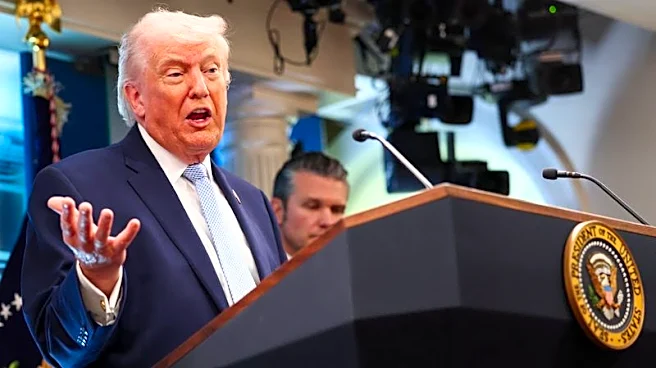
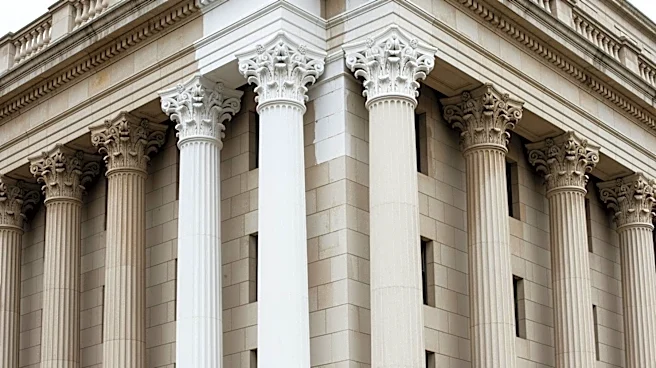
President Trump has submitted a proposal to paint the Eisenhower Executive Office Building white, aiming to address its maintenance issues and improve its visual alignment with surrounding architecture. The building, completed in 1888, currently features
a slate-gray facade that has been criticized for its disrepair and lack of symbolic cohesion with the White House. The proposal highlights the benefits of painting the stone, noting that it is a repeatable solution to the ongoing problem of maintaining the building's exterior. Renderings of the proposed changes have been included in the submission to the Commission of Fine Arts, a panel of Trump appointees that advises on public architecture and design in Washington, D.C. The Commission is scheduled to hear a presentation on the plan on April 16.
Why It's Important?
The proposal to paint the Eisenhower Executive Office Building white is significant as it reflects President Trump's approach to addressing architectural and maintenance issues within the nation's capital. By aligning the building's appearance with the White House, the administration aims to enhance the symbolic cohesion of government structures. This move could set a precedent for future architectural decisions in Washington, D.C., potentially influencing how historical buildings are maintained and visually integrated into their surroundings. The decision also involves taxpayer funding, which may spark discussions on the allocation of public resources for aesthetic improvements versus other priorities.
What's Next?
The Commission of Fine Arts will review President Trump's proposal on April 16, where they will hear a presentation detailing the plan's objectives and expected outcomes. Depending on the Commission's feedback, the proposal may undergo revisions or receive approval for implementation. Stakeholders, including government officials and preservationists, may weigh in on the decision, considering the historical significance of the building and the implications of altering its facade. Public opinion and media coverage could also influence the project's trajectory, potentially leading to broader discussions on architectural preservation and modernization in Washington, D.C.
Beyond the Headlines
Beyond the immediate architectural changes, the proposal to paint the Eisenhower Executive Office Building white raises questions about the balance between preserving historical integrity and modernizing government infrastructure. The decision could prompt debates on the ethical considerations of altering historical landmarks, especially those with significant cultural and political symbolism. Additionally, the involvement of taxpayer funding in aesthetic projects may lead to scrutiny over government spending priorities, highlighting the need for transparency and public engagement in such decisions.