



What's Happening?
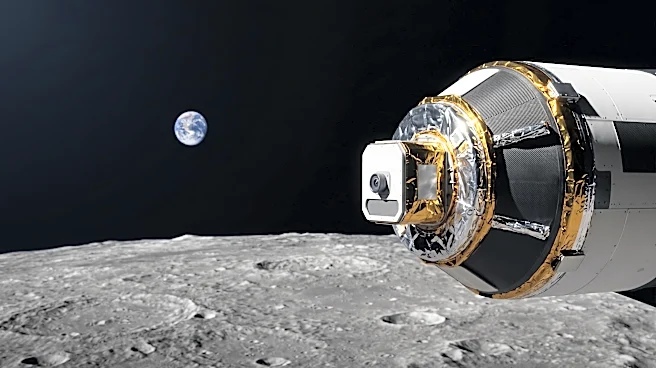
Firefly Aerospace and Starcloud are collaborating to send a new computing system into lunar orbit to test the feasibility of AI data centers in space. Starcloud's SC-1L processor will be integrated into Firefly's Elytra orbital vehicle. This mission aims
to assess the system's ability to capture, process, and transmit data directly from space back to Earth. The initiative is driven by the vision of establishing data centers beyond Earth, potentially freeing up land currently used for data centers and supporting future lunar infrastructure. The system will utilize Firefly's Solux cameras, which are designed to assist spacecraft navigation and landing in environments where standard GPS is unavailable, such as space. Starcloud's processor will then perform intensive AI computations on the camera data while in orbit. This test builds upon Starcloud's previous success in running AI models in low Earth orbit, marking a significant step towards advanced lunar operations.
Why It's Important?
This collaboration is crucial for the future of space exploration and data management, particularly for U.S. interests in lunar development. By demonstrating the capability to process large volumes of data in lunar orbit, the project lays the groundwork for robust computing infrastructure essential for sustained human and robotic presence on the Moon. This could significantly reduce the reliance on Earth-based data processing for lunar missions, enhancing efficiency and real-time decision-making. The development of in-space data centers could also alleviate environmental and land-use pressures associated with terrestrial data centers. Furthermore, the successful deployment and operation of such a system would solidify U.S. leadership in space technology and AI integration, potentially attracting further investment and fostering innovation in both the aerospace and technology sectors. This initiative could also create new economic opportunities in space-based services and infrastructure.
What's Next?
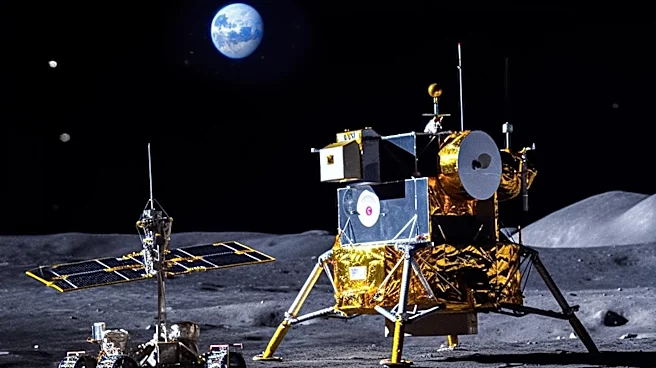
The test is scheduled as part of Firefly's third lunar mission, which is projected to launch in 2028. Prior to the full-scale AI testing, the Elytra vehicle will serve as a communications relay for the Blue Ghost lander, which will deploy instruments at the Moon's Gruithuisen Domes for NASA. Following this initial task, Elytra is expected to remain in lunar orbit for five years. During this extended period, in addition to the Starcloud test, the vehicle will employ high-resolution telescopes to map the Moon's surface and conduct mineral surveys. The data gathered from these activities will be critical in evaluating the performance of the SC-1L processor and the overall viability of lunar-orbiting AI data centers, informing future designs and operational strategies for space-based computing infrastructure.
Beyond the Headlines
This endeavor represents a significant conceptual shift in how data infrastructure might evolve, moving beyond Earth-centric models. The ethical and regulatory frameworks for data processing and storage in extraterrestrial environments will need to be developed, addressing issues of data sovereignty, security, and environmental impact in space. The long-term implications could include the establishment of a 'space internet' or a distributed network of data centers supporting a multi-planetary civilization. This could also lead to new forms of space-based commerce and services, potentially transforming industries from scientific research to resource extraction. The ability to process data at the source in space could also accelerate scientific discovery and enable more autonomous and complex missions, reducing latency and bandwidth constraints inherent in Earth-to-space communications.