




What's Happening?
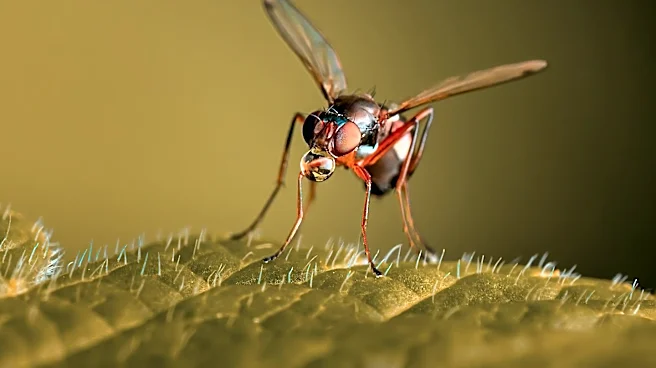
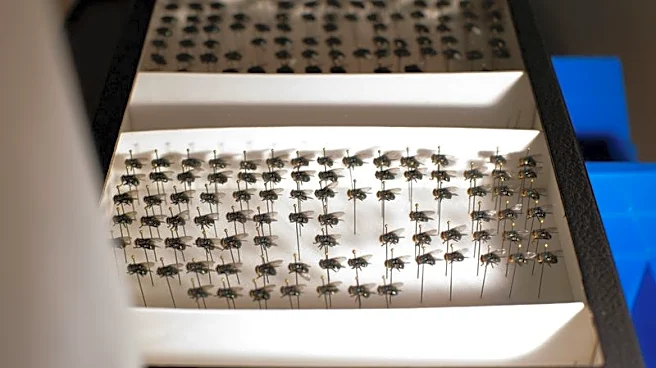
The USDA is intensifying efforts to control the New World screwworm, a parasite that poses a significant threat to cattle and other warm-blooded animals in the U.S. The agency has reopened a sterile-fly production facility in Metapa, Mexico, and completed
a dispersal facility at Moore Air Base. A new production facility is also under construction. These efforts aim to increase the production of sterile flies, which are released to mate with wild females, thereby reducing the screwworm population. The northward movement of the screwworm has raised concerns, prompting these renewed efforts.
Why It's Important?
The resurgence of the New World screwworm could have severe economic impacts on the U.S. livestock industry, historically valued at over $1 billion annually. The sterile fly program is a critical biocontrol method that prevents the screwworm from establishing itself in the U.S., protecting cattle and other livestock from infestation. The USDA's actions are crucial in maintaining the health of the livestock industry and preventing potential economic losses.
What's Next?
The USDA plans to release 500 million sterile flies per week to eradicate the screwworm. The agency is also working on regulatory reviews and field evaluations for a new male-only strain of sterile flies, known as Novofly, which could double production efficiency. Field trials in Panama are expected before the end of the year, with potential federal approval for U.S. deployment.