



What's Happening?
Researchers at the University of Nebraska at Omaha are exploring the use of artificial intelligence to improve the efficiency of building operations without compromising occupant comfort. The project, led by assistant professors Iason Konstantzos and
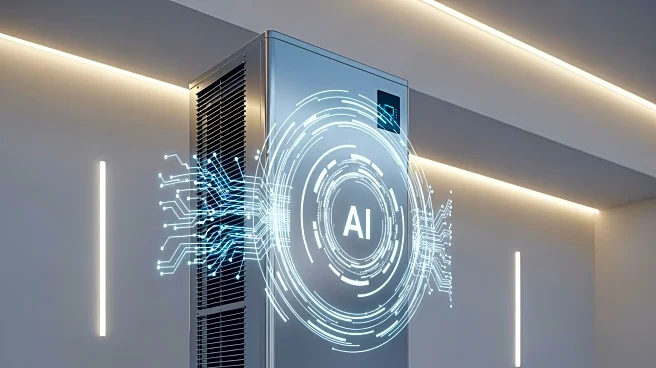
Xiaoqi 'Clare' Liu, along with Dung Tran from the University of Florida, aims to reduce carbon emissions from commercial buildings, which account for over 35% of the United States' carbon emissions. The team received a $1.2 million grant from the National Science Foundation to develop an AI algorithm capable of autonomously managing a building's environment. The research is being conducted in a state-of-the-art facility at the Peter Kiewit Institute, which features advanced HVAC, lighting, and shading systems. The AI system will adjust environmental controls based on data from sensors monitoring physiological functions of occupants, such as heart rate and skin temperature.
Why It's Important?
This initiative is significant as it addresses the dual challenge of reducing energy consumption and maintaining comfort in commercial buildings. By leveraging AI, the project could lead to substantial reductions in carbon emissions, contributing to environmental sustainability efforts. The research also has the potential to influence the design and operation of future residential and commercial buildings, promoting energy efficiency on a larger scale. Successful implementation of AI-controlled systems could set a precedent for integrating advanced technology in building management, potentially leading to widespread adoption across various sectors.
What's Next?
The research team plans to develop a prototype of the AI system by the end of the grant period, with the goal of implementing the technology in other commercial buildings. The project may face challenges in scaling the system for different building types and environments, but the team is committed to continuing their work beyond the initial project timeline. The success of this initiative could attract interest from industry stakeholders and policymakers, potentially leading to collaborations and further funding opportunities.