
What's Happening?
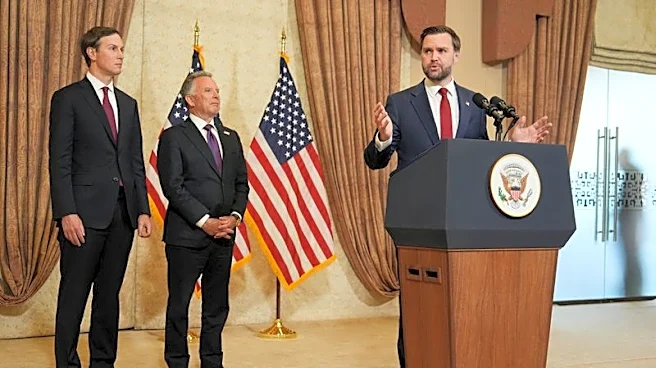
Vice President Vance recently led negotiations with Iranian officials in Islamabad, aiming to establish a long-term peace agreement in the region. The discussions, however, did not result in a successful
resolution, primarily due to disagreements over Iran's nuclear program. These talks are part of ongoing efforts to address regional tensions and nuclear proliferation concerns. The failure to reach an agreement highlights the complexities and challenges involved in diplomatic negotiations with Iran, particularly concerning its nuclear ambitions.
Why It's Important?
The inability to secure a long-term peace agreement with Iran has significant implications for regional stability and international relations. Iran's nuclear program remains a contentious issue, with potential impacts on global security and non-proliferation efforts. The failure of these talks could lead to increased tensions in the Middle East, affecting global oil markets and international diplomatic relations. The outcome of these negotiations is crucial for U.S. foreign policy and its approach to handling nuclear proliferation and regional conflicts.
What's Next?
Following the unsuccessful talks, it is likely that diplomatic efforts will continue, with potential involvement from other international stakeholders to mediate and find a resolution. The U.S. may explore alternative strategies to address the nuclear issue, possibly involving sanctions or further diplomatic engagements. The international community will be closely monitoring the situation, as any escalation could have widespread geopolitical and economic consequences.