
What's Happening?
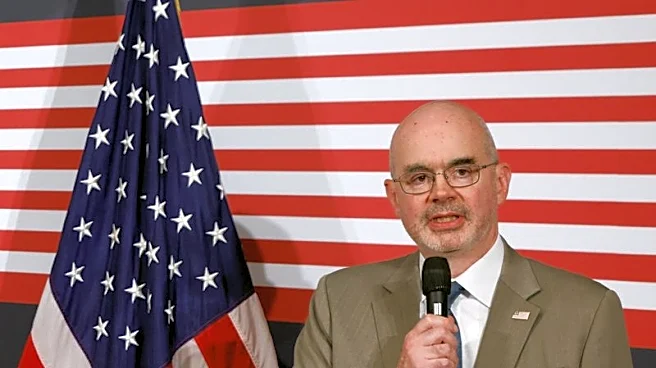
Taiwan's Representative to the United States, Alexander Tah-ray Yui, has dismissed concerns that Taiwan is being 'traded off' in U.S.-China negotiations. Yui emphasized the importance of a proposed $14
billion U.S. arms sale to Taiwan, which President Trump is considering. Despite Trump's recent visit to China, Yui stated that U.S. policy on Taiwan remains unchanged. The U.S. continues to adhere to the 'One China' policy while maintaining unofficial relations with Taiwan. The arms sale, pending Trump's approval, is seen as crucial for Taiwan's security amid tensions with China.
Why It's Important?
The U.S.-Taiwan relationship is a critical component of regional security in Asia, particularly in the context of U.S.-China relations. The proposed arms sale underscores the U.S.'s commitment to Taiwan's defense, which could influence geopolitical dynamics in the region. This development may affect U.S.-China relations, as China opposes arms sales to Taiwan. The situation highlights the delicate balance the U.S. must maintain in its foreign policy, navigating its commitments to Taiwan while managing its relationship with China. The outcome of the arms sale decision could have significant implications for regional stability and U.S. strategic interests.
What's Next?
The pending $14 billion arms sale to Taiwan awaits President Trump's approval. If approved, it could enhance Taiwan's defense capabilities and signal continued U.S. support. However, it may also escalate tensions with China, which views Taiwan as a breakaway province. The potential for a direct call between President Trump and Taiwanese President Lai Ching-te could further impact diplomatic relations. The U.S. will need to carefully manage its diplomatic and military engagements in the region to maintain stability and uphold its strategic interests.