





What's Happening?
A 30-year-old rock climber from Portland, Maine, was rescued on Sunday morning after becoming stranded on Whitehorse Ledge in New Hampshire. The climber, who was alone and without ropes, found himself unable to ascend or descend the 'Sliding Board' route
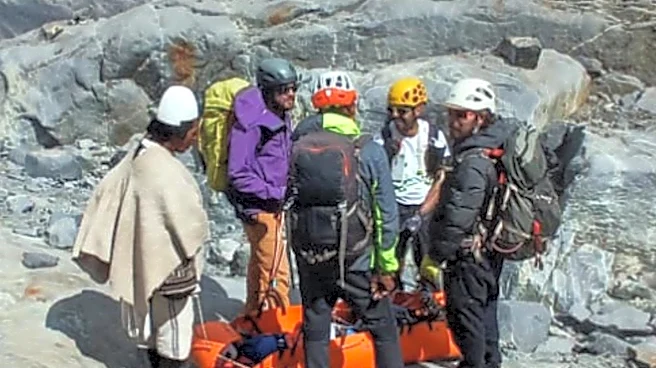
at approximately 500 feet up the cliff face. He contacted authorities for assistance shortly after 8 a.m. The New Hampshire Fish and Game Department, along with members of the Mountain Rescue Service and North Conway Fire and Rescue personnel, responded to the call. Nine climbers from the Mountain Rescue Service quickly organized to reach the stranded individual, secure him, and set up ropes to facilitate a safe descent. The entire party returned to the base of the cliff safely before 10:00 a.m.
Why It's Important?
This incident highlights the critical importance of proper equipment and preparation in outdoor recreational activities, particularly in high-risk sports like rock climbing. Climbing without ropes, especially when alone, significantly increases the danger of such an endeavor. The rapid and coordinated response from multiple rescue agencies underscores the essential role of emergency services in remote and challenging terrains. For the climbing community, this serves as a stark reminder of the potential consequences of underestimating risks and neglecting safety protocols. It also emphasizes the need for climbers to accurately assess their skills and the demands of a route, ensuring they are adequately equipped for all contingencies. The successful rescue prevented a potentially tragic outcome, showcasing the effectiveness of trained mountain rescue teams.
What's Next?
Following the rescue, authorities will likely review the incident to identify any lessons learned regarding safety protocols and public awareness campaigns for outdoor recreation. While no charges were mentioned in the immediate aftermath, such events often prompt discussions within climbing communities about responsible climbing practices and the potential for increased regulations or educational initiatives. Climbers are expected to continue to be encouraged to adhere to established safety guidelines, including carrying appropriate gear, climbing with partners, and understanding their limits. The incident may also lead to renewed calls for funding and support for volunteer-based mountain rescue organizations, which play a vital role in ensuring the safety of outdoor enthusiasts.
Beyond the Headlines
This event touches upon broader themes of personal responsibility versus public safety resources. While the climber was ultimately rescued, the incident consumed significant resources from multiple agencies. It raises questions about the extent to which individuals engaging in high-risk activities should be held accountable for the costs of their rescues, or if such services are a fundamental public good. Culturally, it also reflects the ongoing tension between the allure of extreme sports and the inherent dangers they present. The narrative of a solo climber pushing boundaries without essential safety gear often sparks debate about the fine line between adventurous spirit and recklessness, and how society balances individual freedom with collective safety and resource allocation.