




What's Happening?
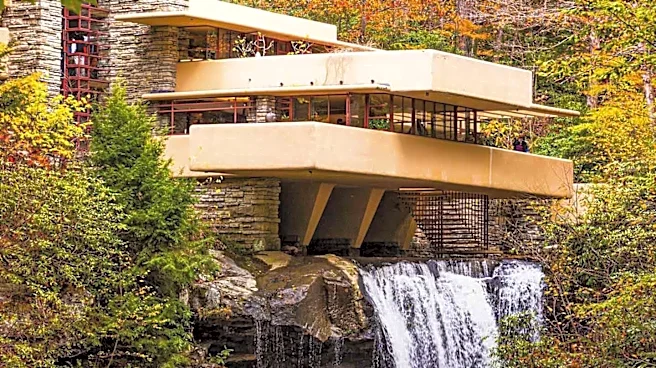
An upcoming talk will delve into Frank Lloyd Wright's experimental 'Ocatilla' camp, constructed in Chandler, Arizona, in 1929. This unique structure, characterized by its canvas roof, was designed to respond to the harsh climate of the Sonoran Desert
through lightweight and responsive design principles. Although Ocatilla only stood for one winter before being destroyed by fire, it significantly influenced Wright's subsequent architectural endeavors in the region. The project sparked his interest in addressing the challenges of desert living, such as extreme heat and water scarcity, leading to other notable designs like Taliesin West in Scottsdale, now a World Heritage site. Jennifer Gray will discuss these projects, highlighting their role as Wright's laboratories for exploring architecture in extreme environments.
Why It's Important?
The discussion of Ocatilla is important as it sheds light on Frank Lloyd Wright's innovative approach to architecture and his early engagement with sustainable design principles, which remain highly relevant today. His exploration of how buildings could adapt to extreme environments and resource constraints, particularly in the Sonoran Desert, offers valuable insights for contemporary architectural challenges. The project's influence on Taliesin West, a globally recognized architectural landmark, underscores its historical significance. Understanding Ocatilla's design philosophy can inform modern discussions on climate-responsive architecture and resource efficiency, especially in regions facing similar environmental pressures. This historical perspective provides a foundation for appreciating the evolution of sustainable building practices.
What's Next?
The talk by Jennifer Gray is part of the 'Our Stories' series, which aims to share unique Arizona and local history topics with a general audience. This event, produced by the Chandler Museum and the Chandler Public Library with support from the Friends of the Chandler Public Library, will likely draw attendees interested in architecture, history, and sustainable design. The insights shared could inspire further research or public discourse on Wright's work and its contemporary relevance. The series itself will continue to offer diverse speakers and topics, enriching the community's understanding of its heritage and broader historical contexts.
Beyond the Headlines
Beyond the architectural details, Ocatilla represents a deeper philosophical inquiry into humanity's relationship with nature and the built environment. Wright's willingness to experiment with unconventional materials and designs in response to environmental conditions highlights a forward-thinking approach that challenged the norms of his time. The story of Ocatilla, a temporary yet influential structure, underscores the idea that even short-lived projects can have lasting impacts on design philosophy and practice. It also serves as a reminder of the continuous need for architectural innovation to address evolving environmental challenges, making Wright's early desert experiments profoundly relevant in an era of increasing climate concerns.