








What's Happening?
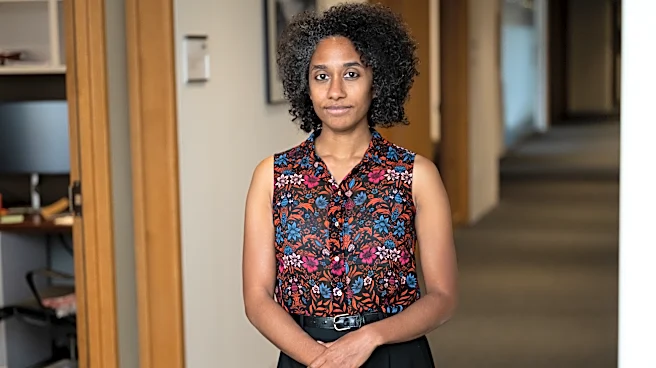
Nikole Hannah-Jones's recent New York Times Magazine essay, 'In Fighting for Every Black Child, Did I Betray My Own?,' has ignited extensive discussion and debate among parents, particularly mothers, regarding educational choices and the ethics of prioritizing
ideals over individual child welfare. The Pulitzer Prize winner chronicled her daughter's challenging elementary and middle school experience in Brooklyn public schools, which Hannah-Jones and her husband chose on principle, aiming to improve education for all children. This essay serves as a follow-up to her equally viral 2016 cover story where she first enrolled her daughter in a low-income, mostly Black public school. The piece details academic struggles, such as classrooms without teachers and uncorrected homework, leading to her daughter's anger and Hannah-Jones's regret over her choices. The essay has become a 'flash point,' consuming message boards, social media, and parent group chats, with reactions ranging from criticism of Hannah-Jones's parenting to existential despair and vindication among parents who made different educational decisions.
Why It's Important?
This discourse is highly significant for U.S. education policy, social equity, and parenting culture. It highlights the profound tension between individual parental choices for a child's 'best' education and broader societal goals of school integration and equitable access. The intense reactions underscore the deep-seated anxieties and guilt many parents, especially mothers, experience when navigating complex educational systems. For Black parents, the essay resonates with the systemic challenges and the feeling that the system was not designed for their children's success, leading to questions about the burden of integration falling disproportionately on Black families. The debate also exposes the differing perspectives on public education, with some advocating for integrated schools and others for selective programs. The article's impact on advocacy groups and public school teachers further illustrates its broad implications for educational reform and the ongoing struggle for equitable opportunities.
What's Next?
The conversation sparked by Hannah-Jones's essay is likely to continue influencing discussions around school choice, integration policies, and parental responsibility in the U.S. It may prompt more parents to critically examine their own educational decisions and engage in local advocacy for school reform. The essay's impact on groups like PLACE NYC and public school teachers suggests that it will be cited in ongoing debates about educational funding, teacher support, and the efficacy of various integration strategies. Political leaders and education policymakers, such as New York City Mayor Mamdani and his chancellor Kamar Samuels, who are pursuing integration through school mergers, may find their efforts both challenged and supported by the ongoing dialogue. The article's enduring resonance indicates that the questions it raises about equity, privilege, and the future of public education will remain central to national conversations.
Beyond the Headlines
The deeper implications of Hannah-Jones's essay extend to the ethical dimensions of personal sacrifice for collective good and the psychological toll of navigating systemic inequalities. The essay forces a confrontation with the reality that even individuals with significant privilege and positional power can struggle within flawed systems, leading to a sense of disillusionment among many. It also brings to light the often-unseen emotional labor performed by mothers in making educational decisions, and the societal pressure to 'get it right.' The criticism Hannah-Jones faces, particularly as a Black woman, highlights the intersection of race, gender, and public scrutiny in parenting. Furthermore, the essay implicitly questions the effectiveness of current integration efforts and whether they truly address the root causes of educational disparities. It suggests a need for systemic change that goes beyond individual choices, fostering a more equitable and supportive educational environment for all children.