
What's Happening?
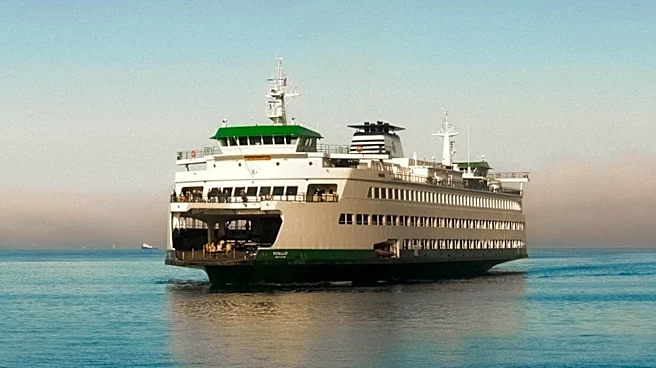
The federal government has allocated over $400 million to the Alaska Marine Highway System (AMHS), as announced by Alaska's congressional delegation and Governor Mike Dunleavy. This substantial funding
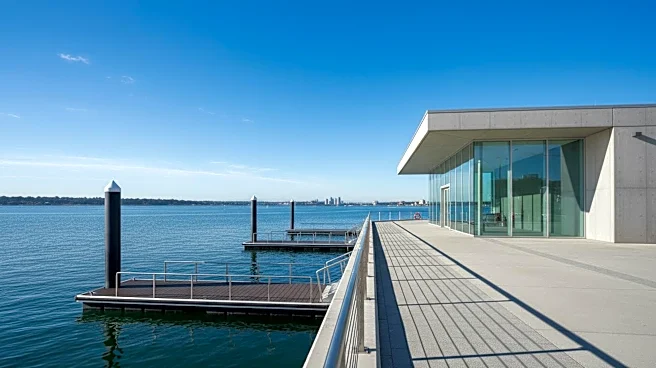
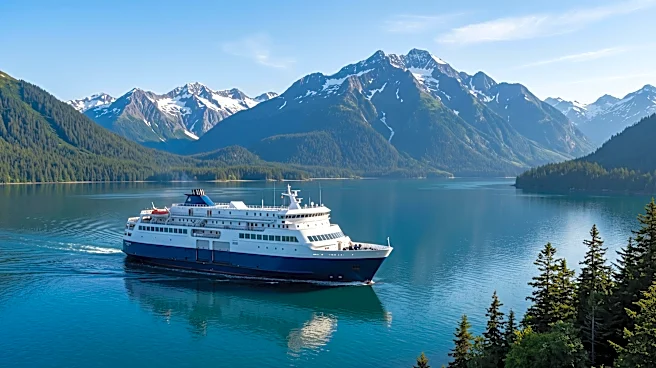
aims to revitalize the aging ferry system, which has been described as a 'lifeline' for many of Alaska's coastal communities. The total funding is divided among seven distinct projects. Key allocations include $161.2 million for restoring the overall health of AMHS, protecting previous federal investments, and $153.4 million for the design and construction of a new dayboat to replace the M/V LeConte. Additionally, $37.6 million is designated for a new ferry terminal at Cascade Point in Juneau, $33.42 million for reconstructing and modernizing the Kake ferry terminal, and $20.6 million for a new terminal in the South Tongass area. Smaller amounts are allocated for a new call center, reservations platform, customer kiosks, and operating assistance. This funding comes after the ferry system faced a potential $78 million budget shortfall, which was expected to be covered by the federal rural ferry program.
Why It's Important?
This significant federal investment is crucial for Alaska's infrastructure and the economic stability of its coastal communities. The Alaska Marine Highway System serves as a vital transportation link, connecting remote areas that are often inaccessible by road. The 'aging fleet' and 'staffing gaps' have previously limited ferry services, impacting residents' access to essential goods, services, and travel. The funding will address these long-standing issues by enabling vessel replacement, terminal modernization, and system reliability improvements. The construction of new dayboats and terminals will enhance capacity and efficiency, ensuring that the AMHS can continue to support the unique logistical needs of the state. Without this federal intervention, the ferry system risked further deterioration, potentially isolating communities and hindering economic activity in regions heavily reliant on marine transport. The investment underscores the federal government's recognition of the AMHS's critical role in Alaska's transportation network and its broader economic and social fabric.
What's Next?
The allocated funds will be directed towards the seven specified projects, with immediate efforts likely focusing on the design and construction phases for new vessels and terminals. The $153.4 million for a new dayboat to replace the M/V LeConte and the $37.6 million for the Cascade Point terminal in Juneau are significant undertakings that will require detailed planning and execution. The implementation of a new call center and reservations platform, along with self-service customer kiosks, will aim to improve customer experience and operational efficiency. The reconstruction and modernization of the Kake ferry terminal and the new terminal in South Tongass will also proceed, enhancing connectivity for those regions. The ongoing challenge will be to manage these projects effectively to ensure timely completion and to address the underlying issues of an aging fleet and staffing shortages that have plagued the system. Continued oversight from the Alaska congressional delegation and Governor Dunleavy will be essential to ensure the funds are utilized to achieve the intended revitalization of the AMHS.
Beyond the Headlines
The substantial federal funding for the Alaska Marine Highway System highlights a broader national conversation about infrastructure investment in remote and geographically challenging regions. While the immediate impact is on Alaska's transportation network, this allocation sets a precedent for how federal resources can be mobilized to support critical services in states with unique logistical demands. The emphasis on 'refreshing' decades-old infrastructure reflects a growing recognition of the need for sustained investment in public services that are fundamental to regional economies and community well-being. Furthermore, the previous risk of the ferry system running out of funding underscores the vulnerability of essential public services to budget shortfalls and the importance of consistent federal support. This situation also brings to light the complex interplay between state and federal funding mechanisms for maintaining vital infrastructure, particularly in areas where private sector solutions are not viable. The success of these projects could serve as a model for other states facing similar infrastructure challenges.