






What's Happening?
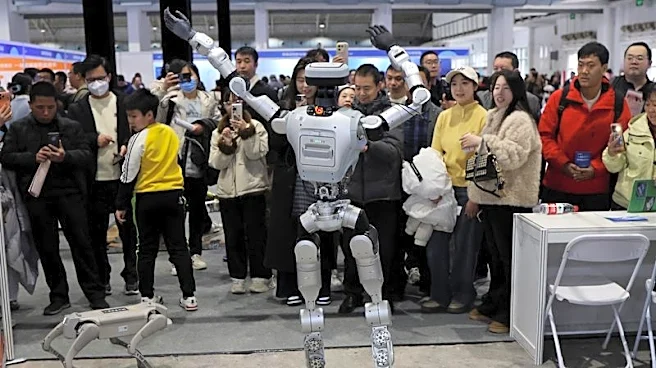
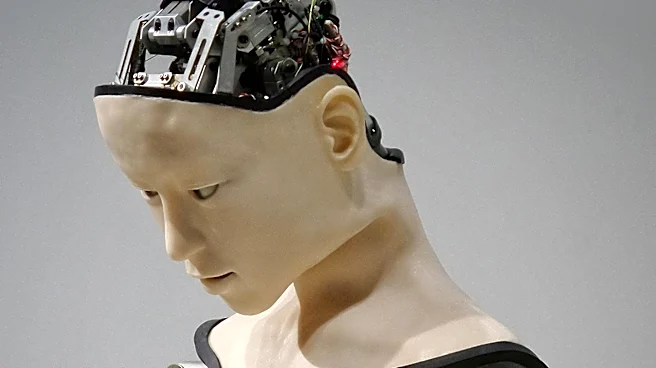
The United States has expanded its national security import restrictions to include advanced humanoid and four-legged robots, citing cybersecurity risks associated with foreign-made robotic technology. The Federal Communications Commission (FCC) announced
that these 'advanced robotic devices,' which mimic human or animal movement, are now restricted from import. This decision follows a White House task force's findings that foreign-built robots could threaten critical infrastructure and the safety of U.S. residents. The ban primarily targets new robot models, with exemptions possible through the Pentagon and the Department of Homeland Security. Notably, most humanoid robots sold in the U.S. are manufactured overseas, particularly in China. The restriction also affects certain foreign-made inverters used in energy systems.
Why It's Important?
This move underscores growing concerns over cybersecurity and national security in the context of advanced technology imports. By restricting foreign-made robots, the U.S. aims to protect its critical infrastructure from potential vulnerabilities that could be exploited through these devices. The decision could significantly impact international robotics manufacturers, particularly those in China, while potentially boosting domestic production. Companies like Boston Dynamics, Tesla, and Agility Robotics, which are already developing or manufacturing robots in the U.S., may benefit from increased demand for domestically produced robots. This policy shift reflects broader geopolitical tensions and the U.S.'s strategic focus on securing its technological landscape.
What's Next?
The implementation of these restrictions may lead to increased scrutiny of foreign technology imports and further policy developments aimed at safeguarding national security. Robotics companies operating in the U.S. might accelerate their production capabilities to meet domestic demand. Additionally, international manufacturers may seek to establish or expand their operations within the U.S. to circumvent these restrictions. The policy could also prompt diplomatic discussions between the U.S. and countries affected by the ban, particularly China, as they navigate the implications for trade and technology collaboration.