







What's Happening?
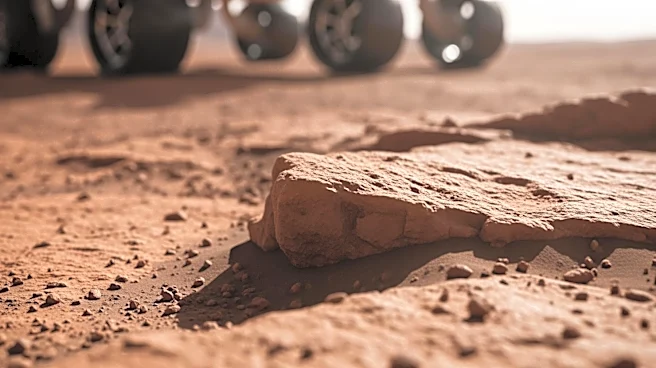
NASA's Curiosity rover encountered an unexpected challenge on Mars when a 29-pound rock, nicknamed 'Atacama', became lodged in its drill sleeve. The incident occurred on April 25, when the rover attempted to sample the rock, which instead of breaking
apart, remained attached to the drill. This unusual situation halted the rover's operations for six days as NASA engineers worked to dislodge the rock. After several attempts involving vibrations and reorientation of the drill, the rock was finally released on May 1, allowing Curiosity to resume its scientific mission on Mars.
Why It's Important?
This incident highlights the unpredictable nature of space exploration and the challenges faced by robotic missions on other planets. The ability of NASA engineers to resolve the issue demonstrates the resilience and adaptability of the Curiosity mission team. Such experiences contribute to the development of more robust technologies and strategies for future missions. The successful resolution of the problem ensures that Curiosity can continue its important work of exploring Mars and gathering data that could provide insights into the planet's history and potential for past life.
What's Next?
With the rock dislodged, Curiosity will continue its exploration of the Martian surface, focusing on its primary mission objectives. The data collected by the rover will be analyzed to enhance our understanding of Mars' geology and climate. This incident may also lead to improvements in the design and operation of future Mars rovers, ensuring they are better equipped to handle similar challenges. NASA will likely incorporate lessons learned from this experience into the planning of upcoming missions, including those that aim to return samples from Mars to Earth.