
What's Happening?
Democratic leaders in the United States are being encouraged to more actively promote clean energy solutions as a means to mitigate the economic impact of rising fossil fuel costs, exacerbated by the ongoing
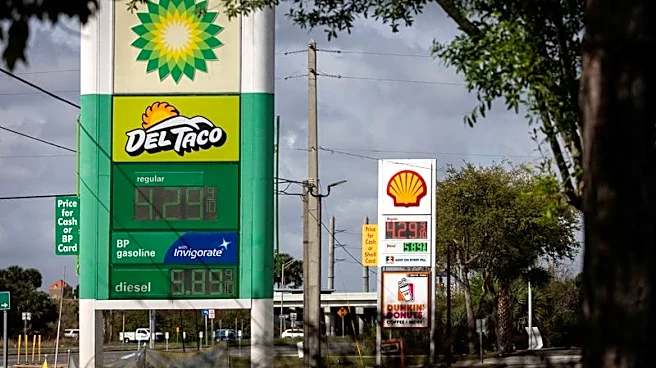
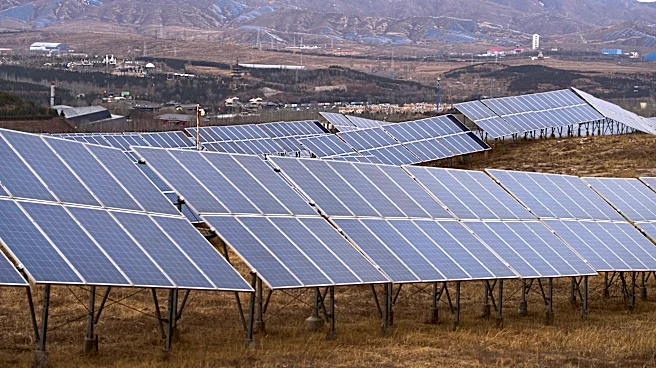
conflict involving Iran. The closure of the Strait of Hormuz has led to a significant increase in global oil and gas prices, affecting the U.S. economy. Despite President Trump's focus on increasing domestic fossil fuel production, Democratic voices like Senator Sheldon Whitehouse and Representative Ro Khanna are advocating for a shift towards renewable energy sources. They argue that clean energy can provide economic security and independence from geopolitical events, contrasting with the volatility of fossil fuels. The Democrats are urged to link clean energy initiatives to affordability and national security, emphasizing the benefits of renewable energy in reducing consumer costs and enhancing economic resilience.
Why It's Important?
The push for clean energy is crucial as the U.S. faces economic challenges due to fluctuating fossil fuel prices. The Iran conflict highlights the vulnerability of relying on fossil fuels, which are subject to global political tensions. Transitioning to renewable energy could offer a stable and sustainable solution, reducing the nation's dependence on oil and gas imports. This shift is not only vital for economic stability but also for addressing climate change, as renewable energy sources are cleaner and more sustainable. The Democrats' ability to effectively communicate the economic benefits of clean energy could influence public opinion and policy, potentially leading to significant advancements in the U.S. energy sector. The outcome of this advocacy could impact the nation's energy policies and its approach to international energy dependencies.
What's Next?
If Democrats successfully link clean energy to economic benefits, it could lead to increased support for renewable energy policies and investments. This might involve legislative efforts to revive incentives for clean energy technologies, which were previously curtailed by Republican opposition. The focus on consumer cost reduction could resonate with voters, potentially influencing upcoming elections and shaping future energy policies. Additionally, international developments, such as the European Union's plans to accelerate clean energy deployment, could serve as a model for U.S. policymakers. The ongoing conflict in Iran may continue to drive discussions on energy independence and the need for a comprehensive strategy to transition away from fossil fuels.
Beyond the Headlines
The broader implications of this shift towards clean energy include potential changes in the U.S. geopolitical stance, as reduced reliance on fossil fuels could alter its relationships with oil-producing nations. Ethically, the move towards renewable energy aligns with global efforts to combat climate change and reduce carbon emissions. Culturally, increased adoption of clean energy technologies could lead to shifts in consumer behavior and industry practices, fostering innovation and sustainability. Long-term, this transition could redefine the U.S. energy landscape, promoting environmental stewardship and economic resilience.