



What's Happening?
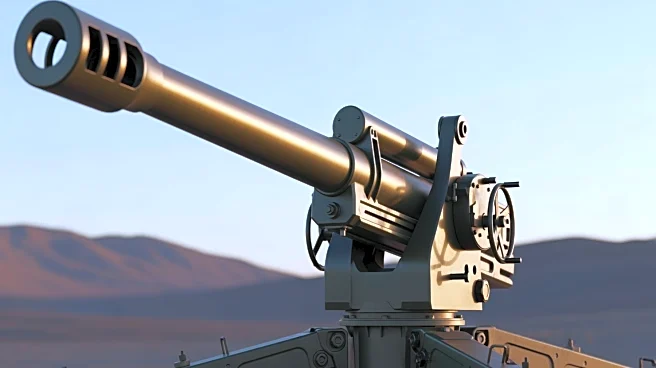
The Australian Army has commenced training with the AS9 Huntsman 155mm self-propelled howitzer, marking the first time this artillery system has been operated on Australian soil. This development is part of a broader transformation of the 3rd Brigade,
which is set to receive a range of new military equipment. The AS9, an Australian adaptation of South Korea's K9 howitzer, extends the army's artillery range to approximately 25 miles. The acquisition includes 30 AS9 howitzers and 15 AS10 ammunition resupply vehicles, with production primarily occurring at a new facility near Melbourne. The 3rd Brigade is also set to receive M1A2 SEPv3 Abrams tanks, AS21 Redback infantry fighting vehicles, and Boxer 8x8 combat reconnaissance vehicles, among others. The first batch of AS9 howitzers is expected to be operational by 2026, with full delivery by 2027.
Why It's Important?
This influx of advanced military hardware signifies a significant upgrade in the Australian Army's capabilities, particularly for the 3rd Brigade, which is transitioning into a heavy armored formation. The integration of the AS9 howitzers and other modern vehicles enhances the army's operational flexibility and firepower, potentially increasing its effectiveness in various combat scenarios. This modernization effort reflects Australia's strategic focus on strengthening its defense posture amid evolving regional security dynamics. The investment in domestic production facilities also underscores a commitment to bolstering local defense manufacturing capabilities, which could have long-term economic benefits.
What's Next?
As the Australian Army continues to integrate these new systems, it faces a steep learning curve in adapting to the advanced technology and tactics required for effective deployment. Training and operational adjustments will be crucial to fully leverage the capabilities of the new equipment. The delivery schedule for the various vehicles extends into the late 2020s, indicating a phased approach to modernization. The army's ability to adapt to these changes will be critical in maintaining its operational readiness and strategic advantage.