



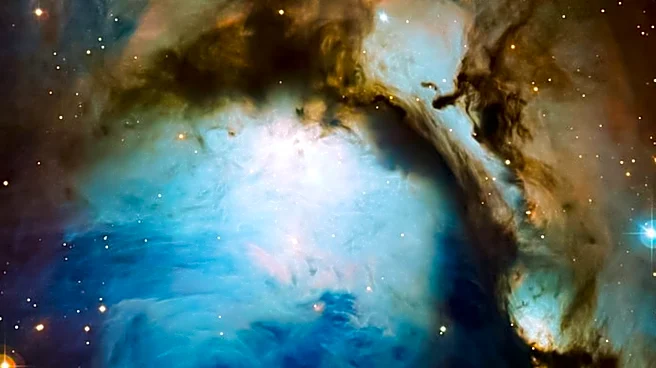

What's Happening?
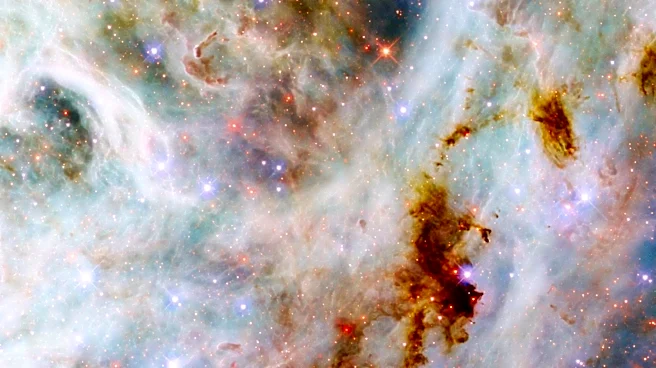
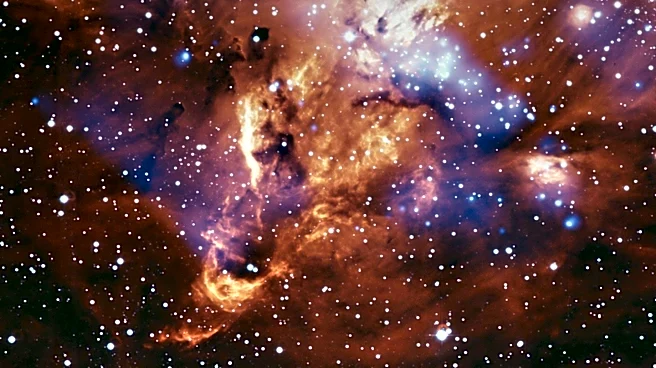
NASA's Chandra X-ray Observatory, along with the James Webb and Hubble Space Telescopes, has provided new insights into the Tarantula Nebula's energy dynamics. The nebula, located in the Large Magellanic Cloud, is a vibrant star-forming region. Despite
expectations, there is less X-ray-emitting gas than anticipated, prompting researchers to investigate energy loss mechanisms. The study suggests that energy is lost through hot gas leaking from the nebula, mixing with cooler gas, and conduction between hot and cooler materials. These processes lower the overall temperature and energy levels within the nebula, offering a complex view of its cooling mechanisms.
Why It's Important?
Understanding the energy dynamics of the Tarantula Nebula is crucial for comprehending star formation and the lifecycle of nebulae. The findings challenge previous assumptions about energy retention in star-forming regions and highlight the intricate processes that govern nebulae's thermal balance. This research enhances our knowledge of how massive stars influence their surroundings and the role of nebulae in galactic evolution. The study also demonstrates the power of combining data from multiple space telescopes to gain a comprehensive understanding of cosmic phenomena, paving the way for future collaborative astronomical research.