



What's Happening?
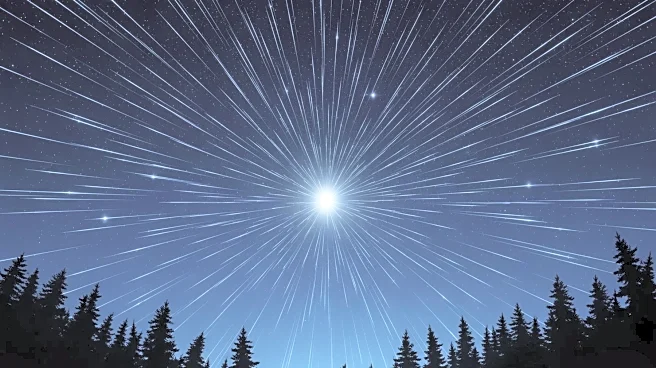
The Geminids meteor shower, one of the most active meteor showers of the year, is set to peak on the evening of December 13, 2025. Known for its bright and colorful shooting stars, the Geminids can produce over 100 meteors per hour under ideal conditions.
This meteor shower is unique as it originates from the 3200 Phaethon asteroid, unlike most meteor showers that are fed by comets. The Geminids began on December 4 and will continue until December 17, offering a spectacular celestial display for those willing to brave the cold December nights. The best viewing conditions are away from city lights, with the radiant point located in the Gemini constellation, which rises in the eastern sky after sunset.
Why It's Important?
The Geminids meteor shower provides a significant opportunity for both amateur and professional astronomers to observe a unique astronomical event. As one of the few meteor showers originating from an asteroid, it offers insights into the composition and behavior of such celestial bodies. For the general public, it presents a chance to engage with astronomy and appreciate the natural wonders of the night sky. The event also highlights the importance of reducing light pollution to enhance visibility of such phenomena, promoting awareness about environmental impacts on astronomical observations.
What's Next?
As the peak of the Geminids approaches, enthusiasts are advised to prepare for optimal viewing conditions by finding locations with minimal light pollution. Observers should dress warmly and allow their eyes to adjust to the darkness for the best experience. The meteor shower's peak coincides with a weekend, potentially increasing public interest and participation in viewing events. Organizations like planetariums and astronomy clubs may host special events to educate and engage the public, fostering a greater appreciation for astronomy.