
What's Happening?
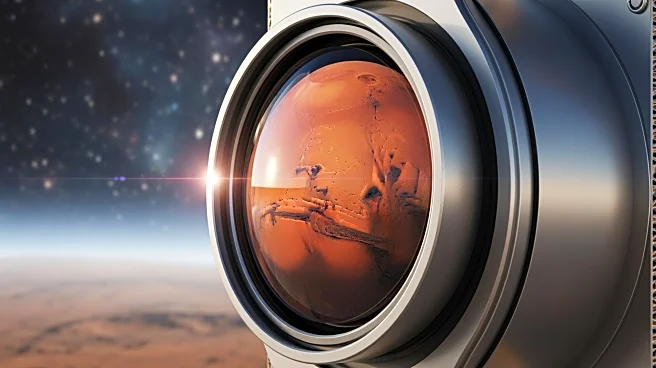
NASA's Mars Reconnaissance Orbiter (MRO) has achieved a significant milestone by capturing its 100,000th image of Mars. The image, taken with the HiRISE camera, features the Syrtis Major region, known
for its mesas, craters, and dunes. This area is located near Jezero Crater, where the Perseverance rover is exploring for signs of past life. Since its launch in 2005 and orbit insertion in 2006, the MRO has been instrumental in studying Mars' surface changes, such as migrating sand dunes and avalanches. The orbiter occasionally observes celestial events, like the interstellar comet 3I/ATLAS, demonstrating its versatility.
Why It's Important?
The MRO's extensive imaging of Mars provides invaluable data for understanding the planet's geological history and current processes. By documenting surface changes over time, scientists can gain insights into Mars' climate and potential habitability. This information is crucial for future missions and the ongoing search for life beyond Earth. The orbiter's ability to capture detailed images also aids in selecting landing sites for rovers and other exploratory missions, enhancing the overall success of Mars exploration efforts.