

What's Happening?
The Trump administration's Department of Justice has announced a new grant program that will allocate $300 million to four cities to implement aggressive policing surges, modeled after the Memphis Safe Task Force. This initiative follows a presidential
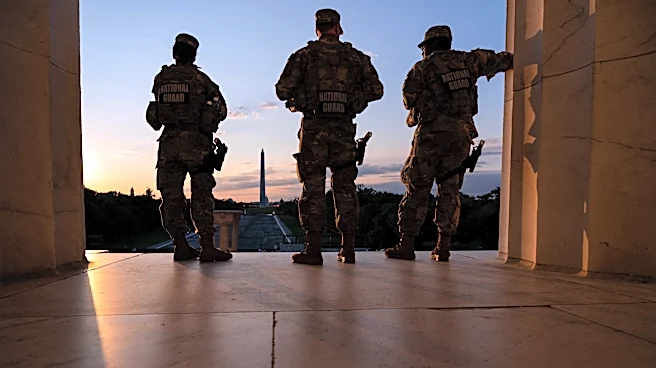
memorandum issued on September 15, 2025, which established the Memphis Safe Task Force. The task force involved the deployment of National Guard troops and federal forces, leading to state violence and economic disruption in Memphis, Tennessee. Local organizers in Memphis have been actively resisting this federal intervention for the past year, forming campaigns like 'Free the 901' to provide community updates, educate residents on their rights, and offer mutual aid. Despite local opposition from elected officials and community groups, the Trump administration is now seeking to expand this policing model to other cities across the country. The grant program requires applicant cities to agree to federal immigration enforcement requests and enforce prohibitions on illicit drug use, urban camping, loitering, and squatting, with potential financial penalties for increases in violent crime or civil unrest.
Why It's Important?
This expansion of the Memphis-style policing model carries significant implications for civil liberties, community relations, and local governance across the U.S. The aggressive tactics employed by the Memphis Safe Task Force, including violent warrant service and the killing of community members during mental health crises, raise concerns about potential human rights abuses and the militarization of local police forces. The economic impact observed in Memphis, with local businesses experiencing significant drops in revenue, suggests that similar programs could harm urban economies in other participating cities. Furthermore, the requirement for cities to comply with federal immigration enforcement and anti-homelessness measures could lead to increased targeting of vulnerable populations and a rollback of local progressive policies. This initiative also highlights a growing tension between federal mandates and local autonomy, as cities are incentivized to adopt policies that may be unpopular or detrimental to their communities in exchange for federal funding.
What's Next?
Four cities will be selected to receive portions of the $300 million grant to implement the Memphis-style policing surges. These cities will need to formally agree to the grant guidelines, which include federal immigration enforcement requests and changes to anti-homelessness rules. This will likely involve securing approval from local authorities such as mayors, sheriffs, and city councils. Community organizers in potential recipient cities are expected to draw lessons from Memphis's year-long resistance efforts, potentially leading to rapid-response campaigns and mutual aid networks to counter the federal intervention. The implementation of these programs will likely face scrutiny from civil rights organizations and local activists, who may challenge the legality and ethical implications of the aggressive policing tactics and the conditions attached to the federal funding. The long-term effects on crime rates, community trust, and economic stability in these cities will be closely monitored.
Beyond the Headlines
The expansion of this policing model reflects a broader shift towards a 'maximum cruelty' approach to law enforcement, as described in the grant guidelines. This approach could normalize the use of militarized tactics and federal intervention in local policing, potentially eroding the distinction between civilian law enforcement and military operations. The emphasis on criminalizing homelessness and illicit drug use, rather than addressing underlying social issues, suggests a punitive rather than rehabilitative approach to public safety. This could exacerbate existing social inequalities and disproportionately affect marginalized communities. The narrative pushed by the Trump administration and Governor Lee in Memphis, suggesting local desire for such interventions, underscores the importance of accurate information dissemination and community-led narratives in countering federal agendas. The long-term impact could be a further erosion of trust between communities and law enforcement, and a deepening of political polarization around issues of public safety and federal overreach.