



What's Happening?
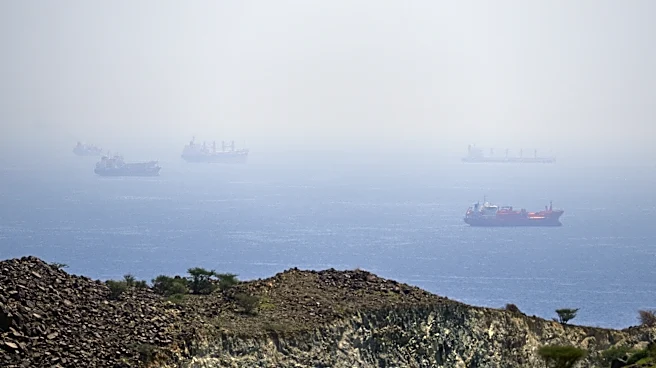
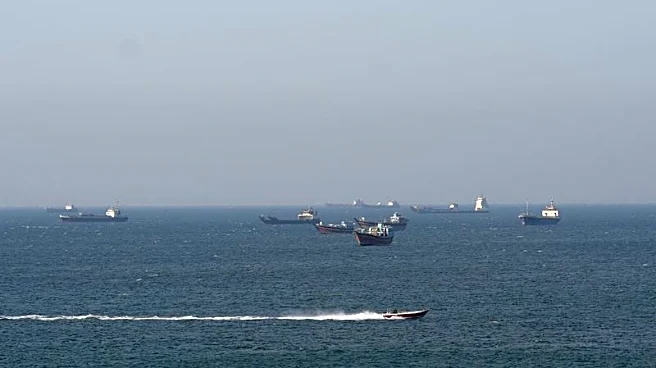
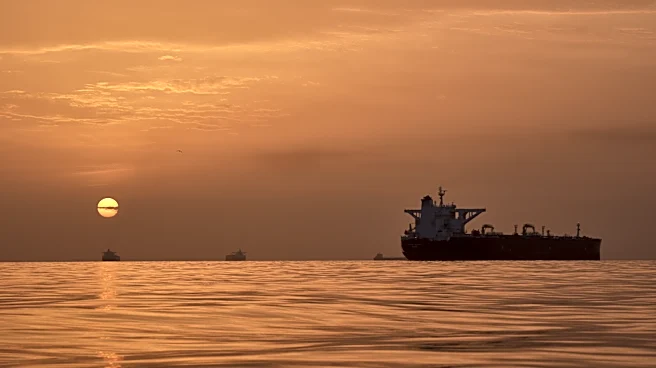
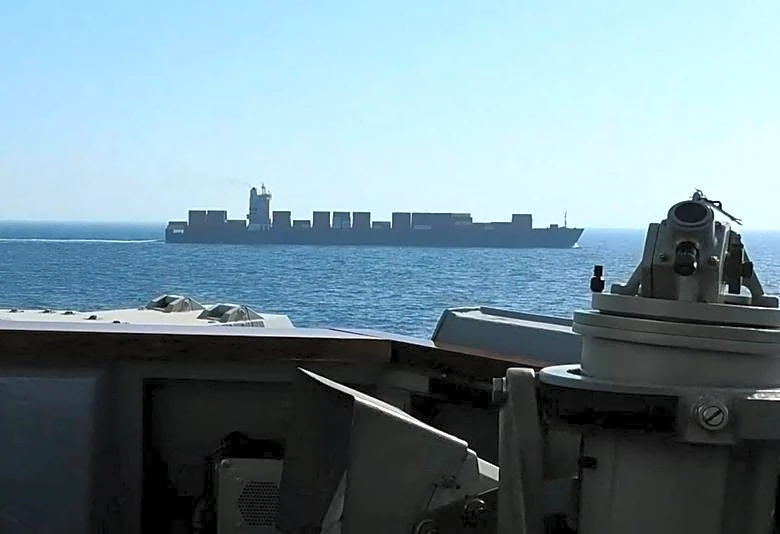
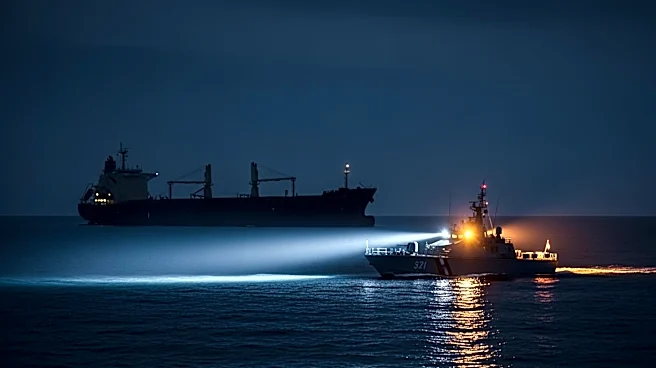
The U.S. military has taken custody of an Iranian-flagged container ship named TOUSKA after it attempted to breach an American naval blockade near the Strait of Hormuz. President Trump announced the incident, stating that a U.S. Navy guided missile destroyer
warned the ship to stop in the Gulf of Oman. When the vessel did not comply, the U.S. Navy fired on the ship, damaging its engine room. The TOUSKA, which is under U.S. Treasury sanctions for previous illegal activities, was intercepted near Iran's border with Pakistan. The Iranian government has not yet commented on the incident. This military action raises questions about the potential extension of a ceasefire between the U.S. and Iran, as tensions in the region continue to escalate.
Why It's Important?
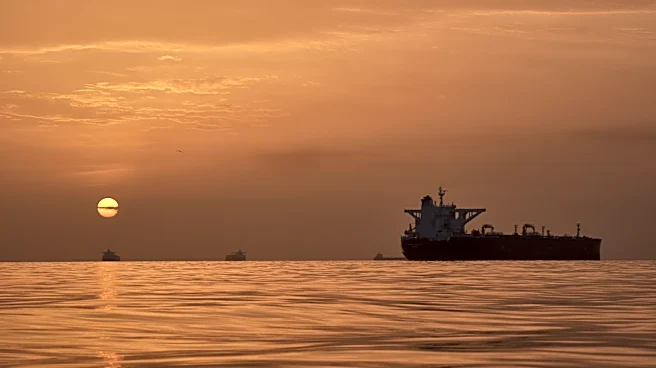
The seizure of the Iranian-flagged ship by the U.S. military underscores the ongoing tensions between the United States and Iran, particularly in the strategically significant Strait of Hormuz. This area is a critical chokepoint for global oil shipments, and any disruption could have significant implications for international oil markets and global economic stability. The incident also highlights the broader geopolitical conflict involving the U.S., Iran, and other regional players, potentially affecting diplomatic relations and security dynamics in the Middle East. The U.S.'s enforcement of the blockade and the subsequent military action could further strain relations and complicate efforts to negotiate peace or extend ceasefires in the region.
What's Next?
Following the seizure of the TOUSKA, U.S. officials are scheduled to travel to Pakistan for further talks with Iranian leaders regarding the ongoing U.S.-Israel conflict with Iran. The outcome of these discussions could influence future military and diplomatic actions in the region. Additionally, the international community will likely monitor the situation closely, as any escalation could impact global oil prices and regional stability. The U.S. may face pressure from allies and international organizations to justify its actions and seek diplomatic solutions to reduce tensions.