






What's Happening?
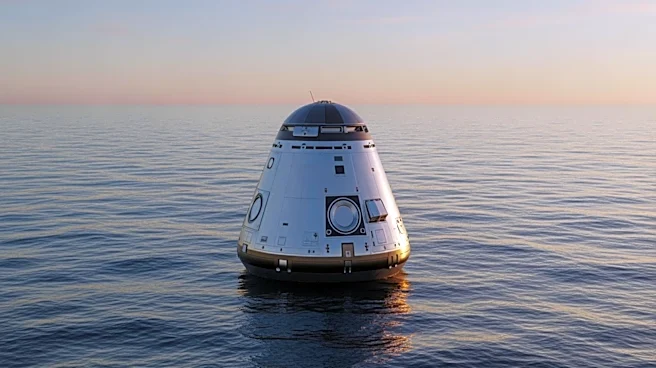
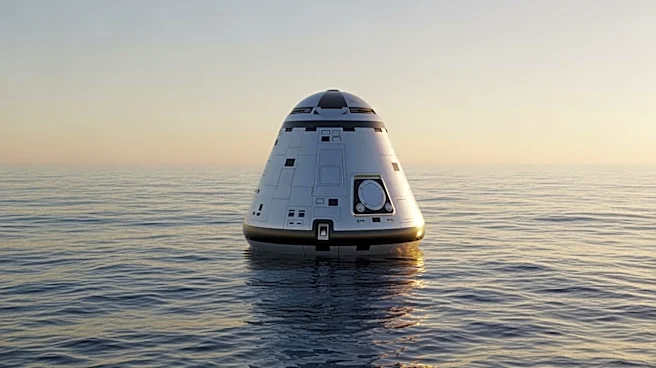
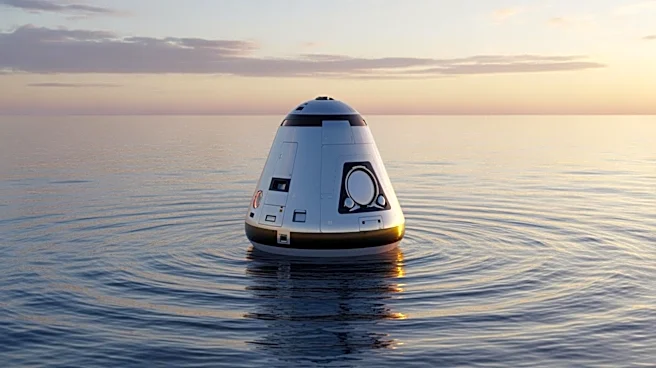
The Artemis II mission has successfully concluded with the crew's safe splashdown in the Pacific Ocean. The mission, which lasted nine days, marked a significant milestone in U.S. space exploration efforts. The crew returned to Earth in the Integrity
capsule, completing a historic journey that included orbiting the Moon. This mission is part of NASA's Artemis program, which aims to return humans to the Moon and eventually send astronauts to Mars. The successful completion of Artemis II sets the stage for future missions, including Artemis III, which plans to land astronauts on the lunar surface.
Why It's Important?
The successful completion of the Artemis II mission is a critical step in advancing U.S. space exploration capabilities. It demonstrates the viability of NASA's new spacecraft and mission protocols, paving the way for more ambitious endeavors. The mission's success also reinforces the United States' leadership in space exploration, potentially inspiring international collaboration and investment in space technology. The Artemis program is expected to drive technological innovation, create jobs, and stimulate economic growth in the aerospace sector.
What's Next?
Following the successful splashdown, NASA will conduct a thorough analysis of the mission data to inform future Artemis missions. Preparations for Artemis III, which aims to land astronauts on the Moon, will intensify. This includes finalizing the design and testing of the lunar lander and other mission components. The success of Artemis II may also accelerate international partnerships and collaborations in space exploration, as countries seek to participate in lunar and Martian exploration efforts.