


What's Happening?
The bodies of 32 Cuban officers killed during a U.S. military operation in Venezuela have been returned to Cuba. The officers were part of the security detail for Venezuelan President Nicolas Maduro during a U.S. raid that resulted in his capture. The repatriation
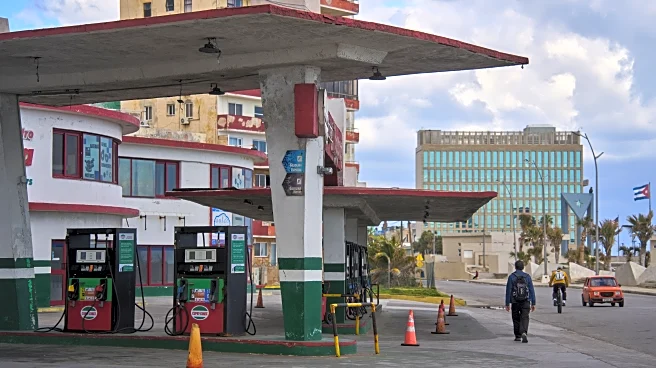
ceremony in Havana was marked by solemn tributes, with thousands of Cubans lining the streets to honor the fallen officers. The incident has heightened tensions between Cuba and the U.S., with President Trump demanding that Cuba negotiate a deal with the U.S. The situation reflects the complex geopolitical dynamics in the region.
Why It's Important?
The repatriation of Cuban officers highlights the broader geopolitical tensions between the U.S., Cuba, and Venezuela. The U.S. operation in Venezuela and the subsequent fallout have strained relations with Cuba, which has historically supported the Venezuelan government. The incident underscores the challenges of U.S. foreign policy in the region, where complex alliances and historical grievances shape diplomatic interactions. The situation also raises questions about the future of U.S.-Cuba relations and the potential for further conflict in the region. The outcome of this situation could have significant implications for regional stability and international relations.
Beyond the Headlines
The incident reflects deeper geopolitical shifts in Latin America, where U.S. influence is often contested by regional powers. The repatriation of Cuban officers serves as a reminder of the historical ties between Cuba and Venezuela and the broader ideological struggles in the region. The situation also highlights the role of military power in shaping diplomatic outcomes and the potential for unintended consequences in complex geopolitical environments. The incident may prompt a reevaluation of U.S. strategy in Latin America and the need for a more nuanced approach to regional diplomacy.