
What's Happening?
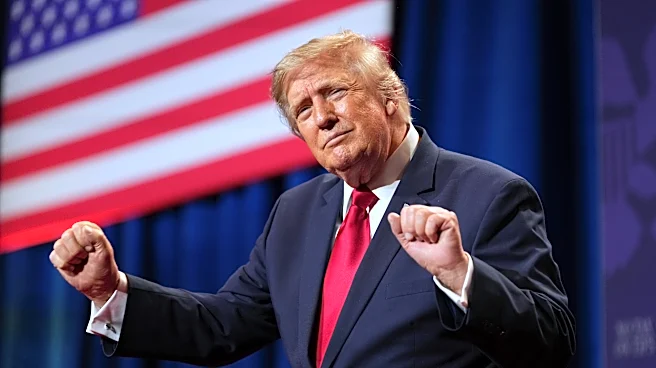
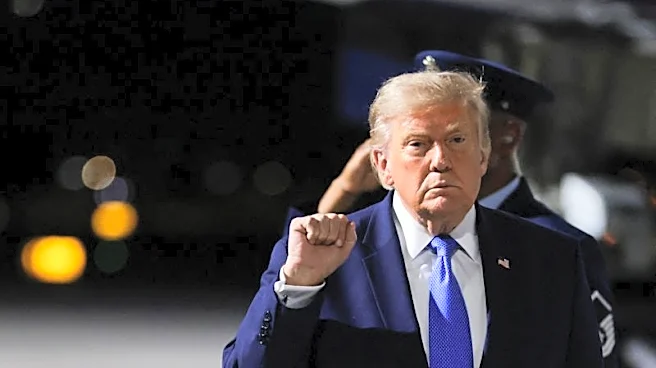
Recent polls indicate a decline in President Trump's approval rating, with figures hovering around 35% to 40%. This drop is attributed to dissatisfaction with his handling of economic issues, particularly
inflation and the cost of living. A Marquette Law School Poll shows that 35% of Americans consider inflation and the cost of living as their top concerns, while a Reuters/Ipsos poll highlights that 70% disapprove of Trump's management of these issues. Despite these challenges, Trump remains a significant figure in the Republican Party, although his influence in recent primaries has waned, with two Trump-backed candidates losing their races.
Why It's Important?
The decline in President Trump's approval rating reflects broader public discontent with economic conditions in the U.S., which could have significant implications for the upcoming midterm elections. As inflation and cost of living remain top concerns for voters, the Republican Party may face challenges in maintaining control of Congress. Trump's influence on the party and its candidates is also under scrutiny, as his endorsement power appears to be diminishing. This situation could lead to shifts in party strategy and candidate selection as Republicans seek to address voter concerns and regain support.
What's Next?
As the midterm elections approach, both parties are likely to intensify their focus on economic issues, with Democrats emphasizing their perceived strengths in managing the economy and cost of living. Republicans may need to reassess their strategies and policy proposals to address voter concerns effectively. President Trump's role in the party and his potential impact on voter turnout will be closely watched, as his approval ratings could influence the party's performance in the elections. The outcome of these elections will shape the political landscape and policy direction in the U.S. for the coming years.