
What's Happening?
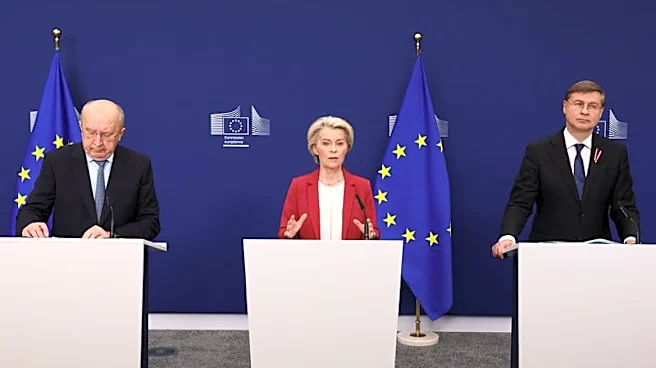
The European Commission has proposed an additional €45 billion ($49.5 billion) in loans for Ukraine in 2027. This proposal aims to cover approximately two-thirds of Ukraine's projected €70 billion funding
shortfall for the upcoming year, as identified by President Volodymyr Zelensky in October. The new loan package is structured into two main components: €20 billion designated for budget support, which will be split equally between macro-financial assistance and the Ukraine Facility, and €25 billion allocated for defense support. The Commission plans to finance this by borrowing on financial markets, backed by the EU budget's headroom, a method consistent with previous Union loans. A key condition for this loan is that Ukraine would only be required to repay it once it receives reparations from Russia. This new proposal builds upon an existing €90 billion EU support loan for 2026 and 2027, which is currently being disbursed. The Commission also intends to introduce legal amendments to encourage international partners to contribute to covering the remaining funding gap, aiming to avoid a repeat of previous shortfalls in third-country contributions.
Why It's Important?
This substantial financial commitment from the European Commission is crucial for Ukraine's continued ability to sustain its defense and maintain essential civilian services amidst the ongoing conflict. The €25 billion earmarked for defense will directly support Ukraine's military capabilities, including the procurement of critical items like air defense systems, drones, electronic warfare equipment, missiles, and ammunition. This is particularly vital as Ukraine anticipates a significant increase in drone usage by Russia in 2027. The €20 billion for budget support will ensure the continued operation of schools, hospitals, and other essential government functions, preventing a collapse of public services. Furthermore, the proposal to link repayment to Russian reparations sets a precedent for accountability and potential future recovery for Ukraine. By incentivizing international partners, the EU aims to broaden the financial burden-sharing, ensuring a more robust and sustainable support framework for Ukraine's long-term stability and reconstruction efforts. This move also sends a strong political signal to Russia about the EU's unwavering commitment to Ukraine's sovereignty and territorial integrity.
What's Next?
The proposed €45 billion loan package will be presented for discussion and approval by EU member states. European Union leaders are scheduled to discuss this proposal at an upcoming summit in Brussels, with hopes of reaching an agreement on funding for 2027 and the broader EU budget by the final EU leaders' meeting of the year in December. Concurrently, the European Commission will continue to work on legal amendments designed to facilitate increased contributions from international allies, particularly G7 members, to help cover Ukraine's remaining funding gap. These amendments aim to make it easier for third countries to provide financial guarantees to the EU's Ukraine Facility and to support new loans to Ukraine that would be repaid from future revenues generated by immobilized Russian sovereign assets. The Commission will also engage with partners in the 'Coalition of the Willing' to discuss the proposal and coordinate peace efforts. The outcome of these discussions will determine the final shape and implementation of this critical financial aid package for Ukraine.
Beyond the Headlines
The European Commission's proposal highlights the growing financial strain on EU member states due to ongoing defense spending, support for Ukraine, and domestic economic challenges. With most EU countries projected to face budget deficits in 2027, finding innovative and sustainable funding solutions is paramount. The condition that Ukraine repays the loan only upon receiving reparations from Russia underscores a broader international push for Russia to bear the financial consequences of its aggression. This approach could set a precedent for future conflict resolution and post-war reconstruction financing. The proposal also implicitly acknowledges the limitations of relying solely on EU funds, emphasizing the need for broader international cooperation. The ongoing debate within the EU about utilizing over €200 billion in frozen Russian state assets for Ukraine's benefit, despite opposition from some member states, points to deeper ethical and legal complexities surrounding sovereign asset appropriation. Future discussions may explore alternative mechanisms like the Windfall Optimization Loan Framework (WOLF) to maximize profits from these assets without altering their legal status, reflecting a continuous search for politically palatable and legally sound solutions to finance Ukraine's long-term needs.