








What's Happening?
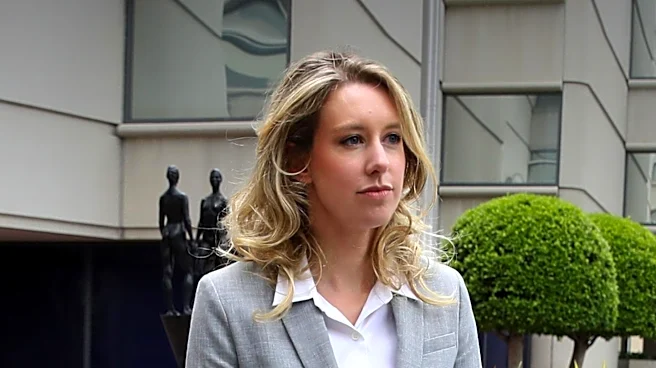
A new documentary film, "You Can See Everything," focusing on disgraced Theranos founder Elizabeth Holmes, has generated significant attention. The film follows Holmes in the weeks leading up to her prison sentence for defrauding investors, depicting
her in everyday domestic life and presenting her as an earnest entrepreneur. This portrayal has led to discussions about the extent of her culpability and the role of gender in her rise and fall. The article highlights that while Holmes, as a white woman, faced challenges in the male-dominated tech industry, her experiences differ significantly from those of women of color. Research suggests that Black, Latina, and Asian American women in tech encounter unique barriers, including exclusion, racial and gendered stereotypes, and blocked routes to advancement, which are not typically faced by white women.
Why It's Important?
This discussion is important for understanding the complex dynamics of gender and race within the U.S. tech industry and broader leadership roles. The film's portrayal of Holmes, and the subsequent analysis, underscores how societal perceptions and biases can influence the careers of women in leadership, particularly in high-stakes environments. It brings to light the disparities in how different women are treated and perceived, suggesting that white women, despite facing gender-based challenges, may navigate these spaces without the additional burden of racial biases. This distinction is crucial for policy discussions and initiatives aimed at fostering diversity and inclusion, as it highlights the need for nuanced approaches that address the specific challenges faced by women of color in achieving and maintaining leadership positions.
Beyond the Headlines
The deeper implication of this discussion is the question of whether women of color would be afforded the same opportunities or leniency as Elizabeth Holmes. The article posits that existing research suggests a resounding 'no' to questions like whether a Latina tech worker could convince investors to back a product defying scientific laws, or if a Black woman executive, found guilty of fraud, could present a picture of rehabilitation. This raises critical ethical and cultural questions about systemic biases embedded within venture capital, corporate culture, and the justice system. It suggests that the 'tools' Holmes used in her defense, or the way her narrative is shaped, might be inaccessible to women of color, pointing to a double standard that perpetuates inequality in high-profile industries. This ongoing dialogue is essential for challenging and dismantling these deeply ingrained biases.