
What's Happening?
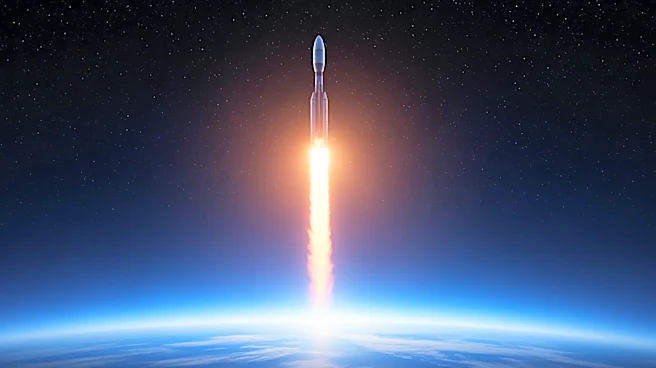
SpaceX has successfully launched its 34th commercial resupply mission for NASA, delivering nearly 6,500 pounds of cargo and scientific equipment to the International Space Station (ISS). The mission, which
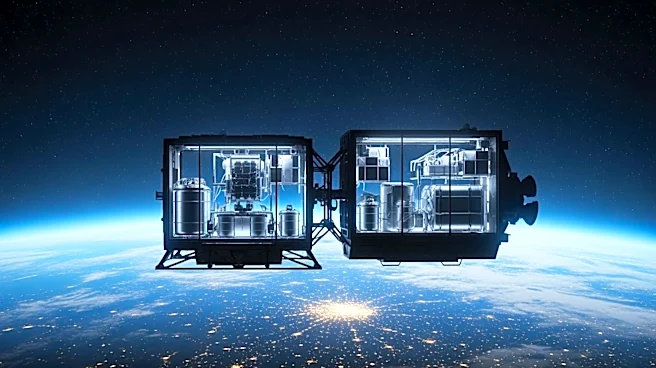
lifted off from Cape Canaveral Space Force Station in Florida, is part of NASA's ongoing efforts to support scientific research in space. The payload includes experiments to study the adaptation of red blood cells and the spleen to spaceflight, as well as instruments to analyze charged particles that can affect satellites and power infrastructure. Additionally, the mission will collect precise measurements of sunlight reflected by Earth and the Moon, contributing valuable data for climate studies.
Why It's Important?
This mission underscores the critical role of the ISS as a platform for scientific research and technological development. The experiments aboard the SpaceX resupply mission have the potential to advance our understanding of human health in space, which is essential for future long-duration missions, such as those planned under NASA's Artemis program and eventual human missions to Mars. The data collected could lead to breakthroughs in medical treatments and improve satellite technology, benefiting both space exploration and terrestrial applications.
What's Next?
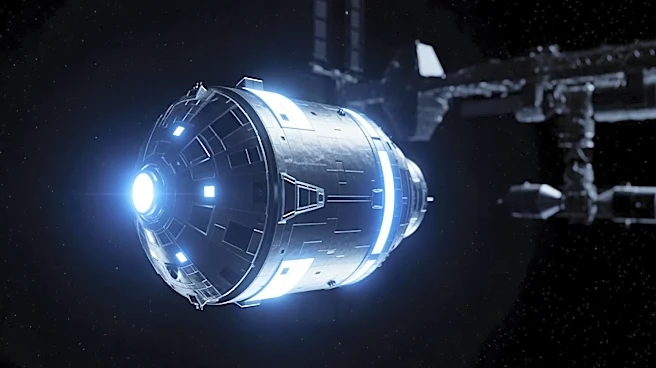
The Dragon spacecraft is expected to remain docked at the ISS until mid-June, after which it will return to Earth with research samples and cargo. The findings from the experiments conducted during this mission will be analyzed and could inform future space missions and medical research. The continued partnership between NASA and SpaceX highlights the importance of commercial collaboration in advancing space exploration.