






What's Happening?
Oil prices have surged following renewed hostilities between the United States and Iran, threatening to disrupt a fragile ceasefire that had previously stabilized global energy markets. Brent crude, the main international benchmark, rose by more than
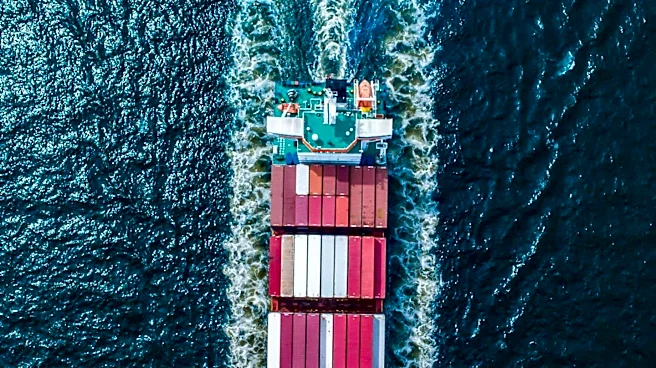
3 percent, reaching $76.48 a barrel, the highest since June 23. This increase follows U.S. military strikes on Iran and the revocation of a temporary waiver on sanctions against Iranian oil, actions taken in response to attacks on three commercial vessels in the Strait of Hormuz. U.S., Qatari, and Saudi officials have blamed Iran for these attacks, although Iran has not claimed responsibility. The U.S. Central Command announced the strikes were intended to impose heavy costs on Iran for targeting commercial shipping. In response, Iran's Deputy Foreign Minister Kazem Gharibabadi stated that Tehran would take decisive actions to safeguard its national interests, describing the U.S. actions as a violation of a memorandum of understanding signed in June.
Why It's Important?
The escalation in U.S.-Iran tensions and the resulting surge in oil prices have significant implications for global energy markets and geopolitical stability. The Strait of Hormuz is a critical chokepoint for global oil shipments, and any disruption can lead to increased volatility in oil prices, affecting economies worldwide. The U.S. decision to revoke the sanctions waiver on Iranian oil further tightens global oil supply, potentially leading to higher energy costs for consumers and businesses. This situation underscores the fragile nature of international agreements and the potential for geopolitical conflicts to impact global markets. The ongoing tensions could also strain U.S. relations with other countries involved in the region, complicating diplomatic efforts to resolve the conflict.
What's Next?
The immediate future may see continued volatility in oil prices as the situation develops. The U.S. and Iran may engage in further military or diplomatic actions, which could either escalate or de-escalate the conflict. The international community, including major oil-importing countries, will likely monitor the situation closely, as prolonged instability in the Strait of Hormuz could have far-reaching economic consequences. Additionally, the U.S. may face pressure from allies and international organizations to seek a diplomatic resolution to prevent further disruption in global oil supplies.