




What's Happening?
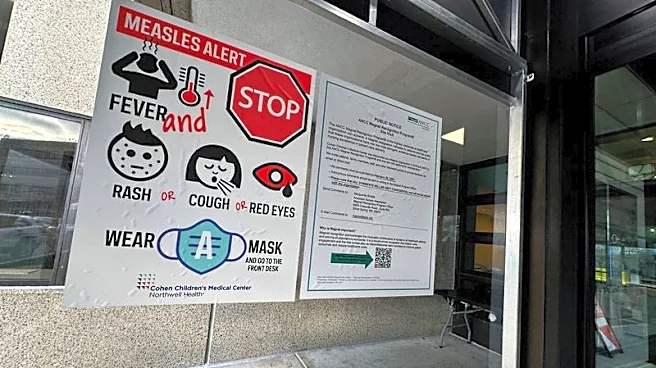
The West Coast Health Alliance (WCHA), comprising public health officers from Washington, Oregon, California, and Hawai'i, has issued a joint statement recommending measles vaccination. This recommendation comes as the United States faces a 30-year high
in measles cases, leading to outbreaks, hospitalizations, and deaths. On November 17, 2026, the Pan American Health Organization (PAHO) determined that the U.S. no longer holds measles elimination status, a status achieved in 2000 due to high vaccination rates. Dr. Dean Sidelinger, health officer and state epidemiologist at Oregon Health Authority, noted that Oregon has reported more measles cases in 2026 than in any year since 1991, with 93% of infections occurring in unvaccinated individuals or those with unknown vaccine status. Wastewater surveillance in Oregon also suggests a more widespread presence of measles than reported cases indicate. Similarly, Dr. Kenneth Fink, director of the Hawai'i State Department of Health, highlighted Hawai'i's vulnerability as a travel destination and a decrease in MMR vaccination rates among kindergarteners from 94.3% in 2021 to 89.3% in 2025. Dr. Tao Sheng Kwan-Gett of the Washington State Department of Health reported a nearly fivefold increase in cases in Washington compared to 2025.
Why It's Important?
The resurgence of measles in the U.S. carries significant public health implications, threatening the health and safety of communities nationwide. The loss of measles elimination status, a benchmark achieved through decades of vaccination efforts, underscores a critical decline in public health immunity. This situation places vulnerable populations, such as infants and individuals who cannot be vaccinated, at increased risk of severe illness and complications. The economic impact could include increased healthcare costs due to hospitalizations and outbreak response, as well as potential disruptions to daily life, such as school closures. The WCHA's emphasis on evidence-based immunization guidance from organizations like the American Academy of Pediatrics (AAP) and the American Academy of Family Physicians (AAFP) highlights the importance of trusted medical advice in combating vaccine hesitancy. The call for strengthened measles testing capacity by the Centers for Disease Control and Prevention (CDC) is crucial for timely outbreak detection and response, which is essential for regaining elimination status and protecting public health.
What's Next?
The WCHA continues to advocate for high vaccination coverage, robust disease surveillance, and prompt outbreak response to regain measles elimination status. Individuals who are not fully vaccinated or are unsure of their status are urged to consult a healthcare provider about receiving the measles, mumps, and rubella (MMR) vaccine. Children can receive their first MMR shot as early as 6 months in areas with continued spread, while adults who are unsure of their vaccination history should consider getting an MMR shot. The WCHA also stresses the importance of access to vaccines, including coverage through government programs, to protect communities. Continued efforts to strengthen measles testing capacity by the CDC will be vital for states to effectively manage and respond to outbreaks. Public health campaigns and healthcare provider outreach will likely intensify to educate the public on the renewed risk of measles and the benefits of vaccination.
Beyond the Headlines
The re-emergence of measles reflects broader societal challenges, including the spread of misinformation and vaccine hesitancy, which undermine public health initiatives. The decline in vaccination rates, as seen in Hawai'i, creates fertile ground for preventable diseases to resurface, posing ethical dilemmas regarding individual liberties versus collective public health. The detection of measles in wastewater samples, as reported in Oregon, indicates a silent spread that can precede clinical cases, highlighting the need for advanced surveillance methods. This situation also underscores the interconnectedness of global health, as travel can quickly reintroduce diseases into populations with waning immunity. The long-term implications could include a shift in public health policy towards more stringent vaccination requirements or enhanced public education campaigns to rebuild trust in established medical science. The collective effort of healthcare providers, public health agencies, and communities will be essential to reverse this trend and protect future generations from preventable diseases.