









What's Happening?
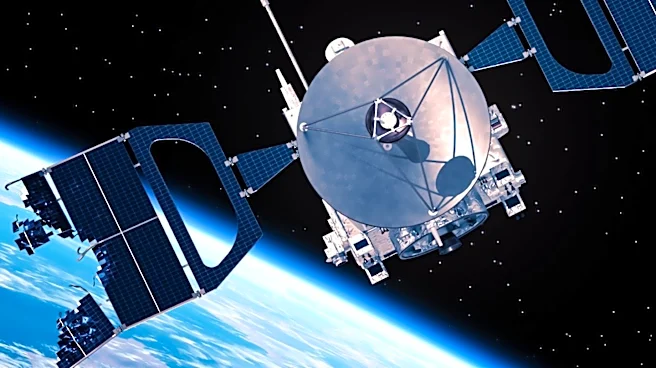
Reflect Orbital, a California-based startup, has received authorization from the US Federal Communications Commission (FCC) to launch its first space mirror, Eärendil-1, into low-Earth orbit. This satellite aims to redirect sunlight to Earth at night
using a 59-foot reflective surface. The company plans to deploy a constellation of 50,000 such satellites by 2035, potentially illuminating areas up to 3 miles on the ground. The technology is intended for use in various industries, including solar energy, agriculture, and emergency response. However, the project faces criticism over potential impacts on optical astronomy, wildlife, and aviation safety, with nearly 2,000 public comments opposing the plan.
Why It's Important?
The launch of Eärendil-1 represents a significant development in space technology, with potential applications across multiple sectors. By providing on-demand sunlight, the project could revolutionize industries that rely on natural light, such as agriculture and construction, and enhance emergency response capabilities. However, the initiative raises concerns about space debris, light pollution, and its impact on astronomical observations. The opposition from scientific communities highlights the need for careful consideration of the environmental and scientific implications of such large-scale satellite deployments.
What's Next?
Reflect Orbital plans to proceed with the launch of Eärendil-1 later this year, with further deployments contingent on the success of this initial mission. The company will need to address the concerns raised by astronomers and environmentalists, potentially leading to regulatory reviews or modifications to their plans. The outcome of this project could set precedents for future space-based technologies and their integration into existing regulatory frameworks.